On May 20, 2026, five teachers and sixteen students from Hefei Ansheng School visited the Anhui Provincial Engineering Research Center for Advanced Functional Polymer Films at the University of Science and Technology of China for a science outreach and study activity. Student volunteers from the Graduate Student Party Branch of the Engineering Center served as guides, leading the visiting teachers and students to experience advanced research platforms up close and learn about cutting-edge technologies in polymer films. The lively and engaging explanations, together with the immersive visit experience, received unanimous praise from all the teachers and students.
Polymer films are key foundational materials in fields such as new displays, new energy, automobiles, and nuclear energy, and they have a profound impact on industrial development and everyday life. During the visit, students from the Party Branch introduced the Engineering Center’s research directions and technological achievements in an accessible and progressive manner, unveiling the “mystery” of polymer films for the visitors. From the application principles of polymer films as “smart windows” to the pain points of traditional research and development models, the guides used plain and easy-to-understand language to explain professional knowledge, helping everyone quickly understand the research value and development significance of this field.
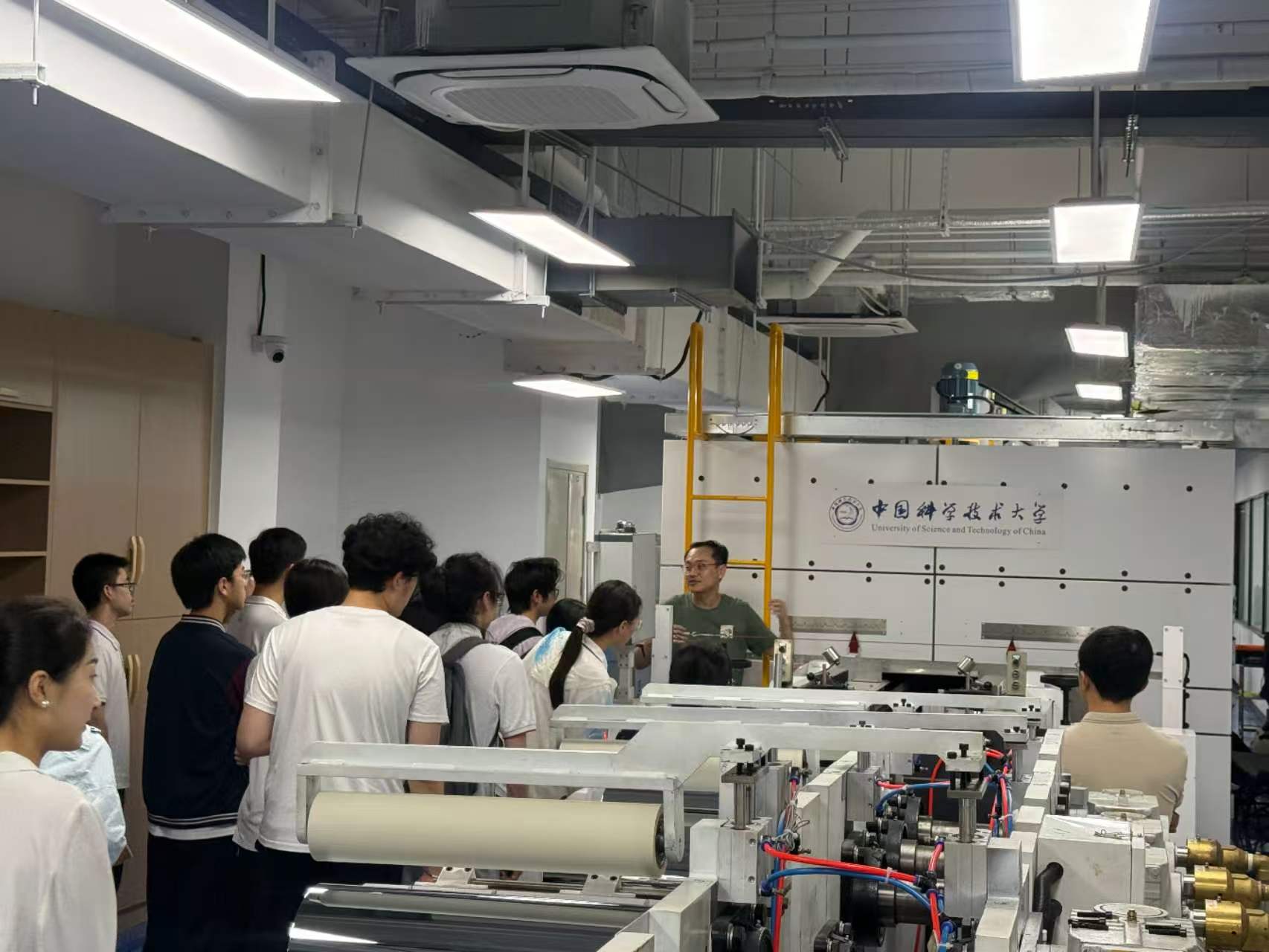
In the research exhibition area and experimental platforms, the teachers and students visited a series of full-process film research facilities built on the synchrotron radiation light source. The guides gave detailed introductions to large-scale in situ experimental equipment, including melt/solution multilayer extrusion casting film-forming equipment and biaxial film stretching equipment, as well as various precision experimental devices such as high-temperature and high-pressure systems and in situ nuclear magnetic resonance instruments. They also explained the important role of these facilities in revealing the structural evolution of films during processing and in unlocking the “black box” of research and development.
The visitors then engaged in discussions focusing on the Center’s major research achievements. Around typical outcomes such as domestically developed optical films, lithium battery separators, automotive laminated films, and adsorbent materials for uranium extraction from seawater, the guides introduced the Center’s collaborative industry–university–research efforts with enterprises including Wanwei Group, China Lucky Group, and China National Nuclear Corporation. From breakthroughs in “bottleneck” material technologies such as PVA optical films and the establishment of multiple large-scale production lines, to the expansion of applications in new energy, agriculture, nuclear energy, and other fields, each practical achievement and technological breakthrough enabled the visiting teachers and students to gain a vivid sense of China’s strong capacity for independent innovation in high-end functional materials.
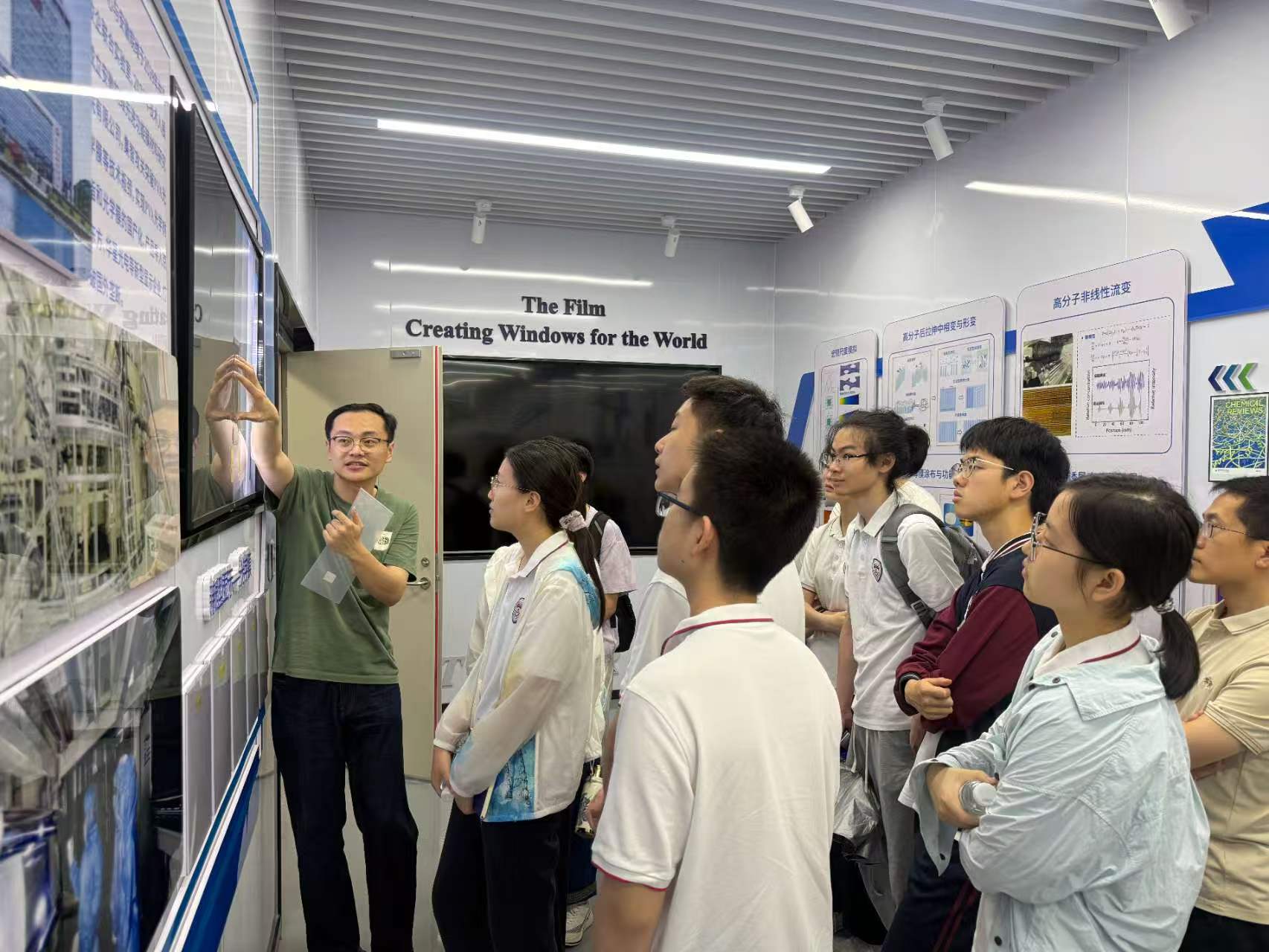
The atmosphere throughout the visit was warm and enthusiastic. The students listened attentively while actively asking questions and engaging in discussions, broadening their horizons and gaining new knowledge through interaction. Teachers and students from Hefei Ansheng School said that the study activity was highly informative and rewarding. It not only gave them an intuitive understanding of frontier materials science, but also allowed them to feel the responsibility and commitment of researchers who devote themselves to tackling key scientific and technological challenges in service of national needs.
This visit was both a vivid science outreach practice and a concrete demonstration of the Party Branch’s role in education and service. In the future, the Graduate Student Party Branch of the Engineering Center will continue to serve as a bridge, actively carry out science outreach and exchange activities, spread the spirit of science, and encourage more young people to approach scientific research and develop a love for science.