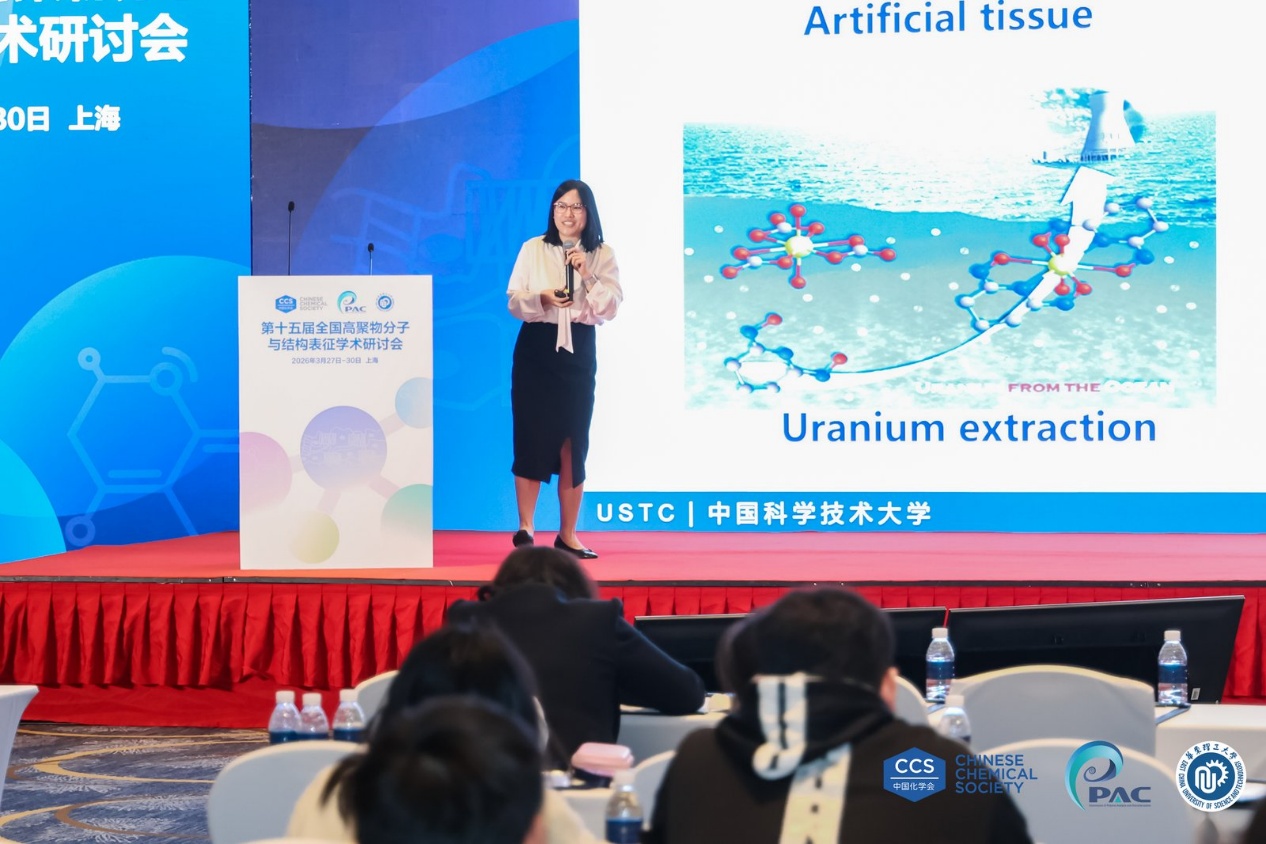
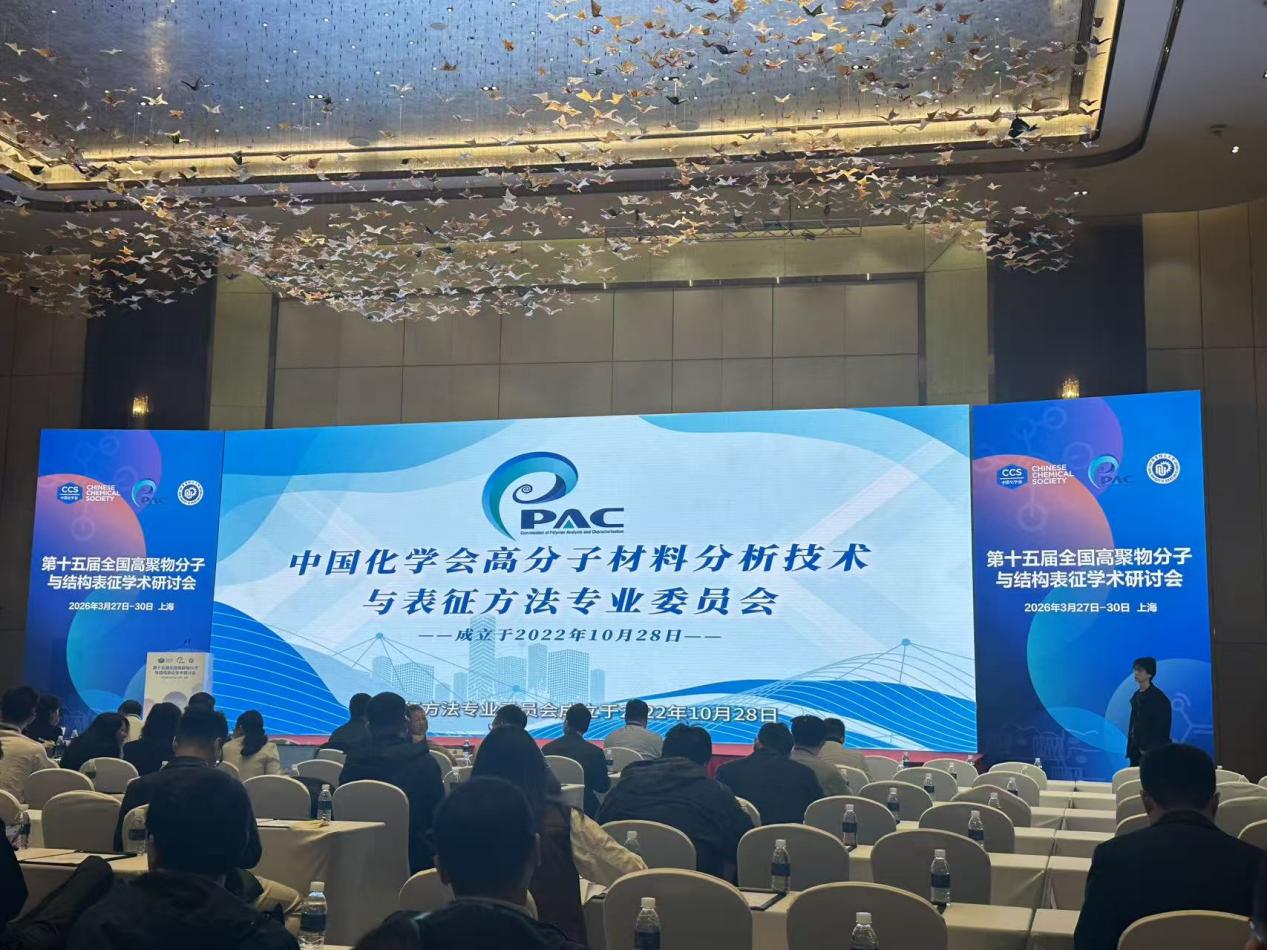
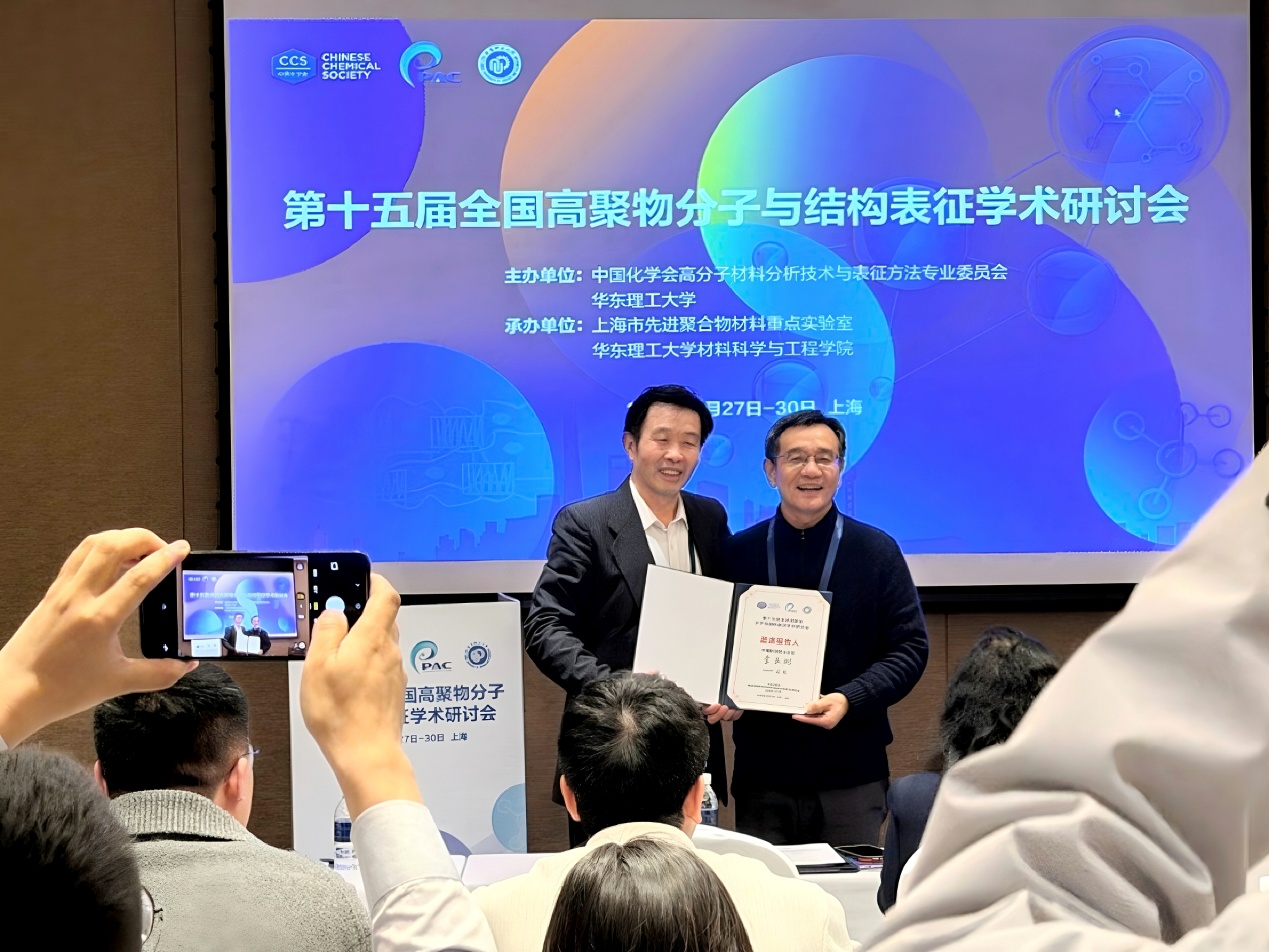
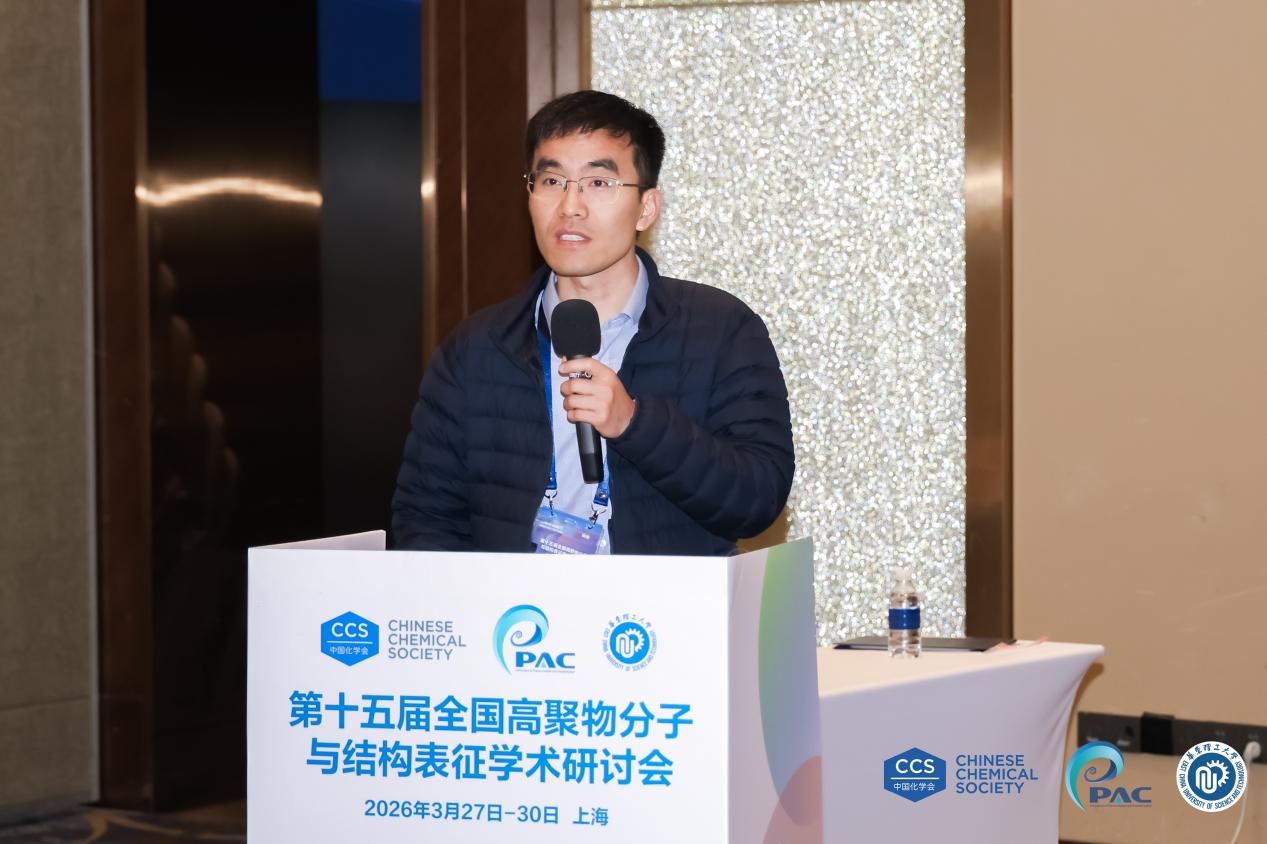
From March 27 to 30, 2026, the 15th National Symposium on Polymer Molecular and Structural Characterization of the Chinese Chemical Society was successfully held in Shanghai. The conference was jointly organized by the Division of Analytical Techniques and Characterization Methods for Polymeric Materials of the Chinese Chemical Society and East China University of Science and Technology, with Professor Jian Xu serving as Chair of the Academic Committee. The conference featured in-depth exchanges around the following eight themes:
1. Polymer molecular and structural characterization; 2. Polymer solutions, sols, and gels; 3. Polymer surfaces and interfaces; 4. Structure–property relationships of polymers; 5. Advanced characterization methods and their applications; 6. Functional polymers; 7. Polymer theory, simulation, and artificial intelligence; 8. Graduate student forum.
Professor Liangbin Li led members of the SMG Research Group to participate in the conference and delivered an academic presentation entitled “Application of High Count-Rate Positron Annihilation Lifetime Spectroscopy in the In Situ Characterization of Free Volume in Polymers.” The report focused on the scientific issue of structural evolution in the amorphous regions of semicrystalline polymers under stress fields, pointing out that in situ tracking of sub-nanometer free-volume holes is key to linking microscopic mechanisms with macroscopic mechanical behavior. The team developed an in situ characterization technique based on high count-rate positron annihilation lifetime spectroscopy (PALS) coupled with a tensile device, enabling real-time quantitative observation of the size, number density, and distribution of free-volume holes during deformation. Their research revealed the coalescence behavior and bimodal distribution evolution of free-volume holes under strain localization, directly confirming their intrinsic correlation with amorphous-phase instability, micropore formation, and the generation of fibril-bridge precursors. They also discovered a quantitative linear relationship between free-volume fraction and stress, and on this basis proposed the concept of a “free-volume modulus.” This work provides an in situ, high-temporal-resolution characterization method spanning sub-nanometer to nanometer scales for the study of deformation mechanisms in semicrystalline polymers.
Professor Kunpeng Cui delivered a presentation entitled “In Situ Synchrotron Radiation Studies on Polymer Film Processing,” sharing the team’s latest achievements in the mechanisms and in situ characterization of advanced polymer film processing. In response to China’s heavy dependence on imports for high-end films used in emerging displays, new energy, and other fields, the team has focused on the scientific challenge of rapid multiscale structural evolution and independently developed large-scale in situ research equipment for synchrotron-radiation-assisted steel-belt casting and vertical biaxial stretching. This equipment successfully simulates industrial processing scenarios and has revealed the crystallization and orientation behaviors of films such as PVA and iPP under complex external fields, providing important scientific evidence and platform support for overcoming key technological barriers in strategic materials and achieving the domestic production of high-end films.
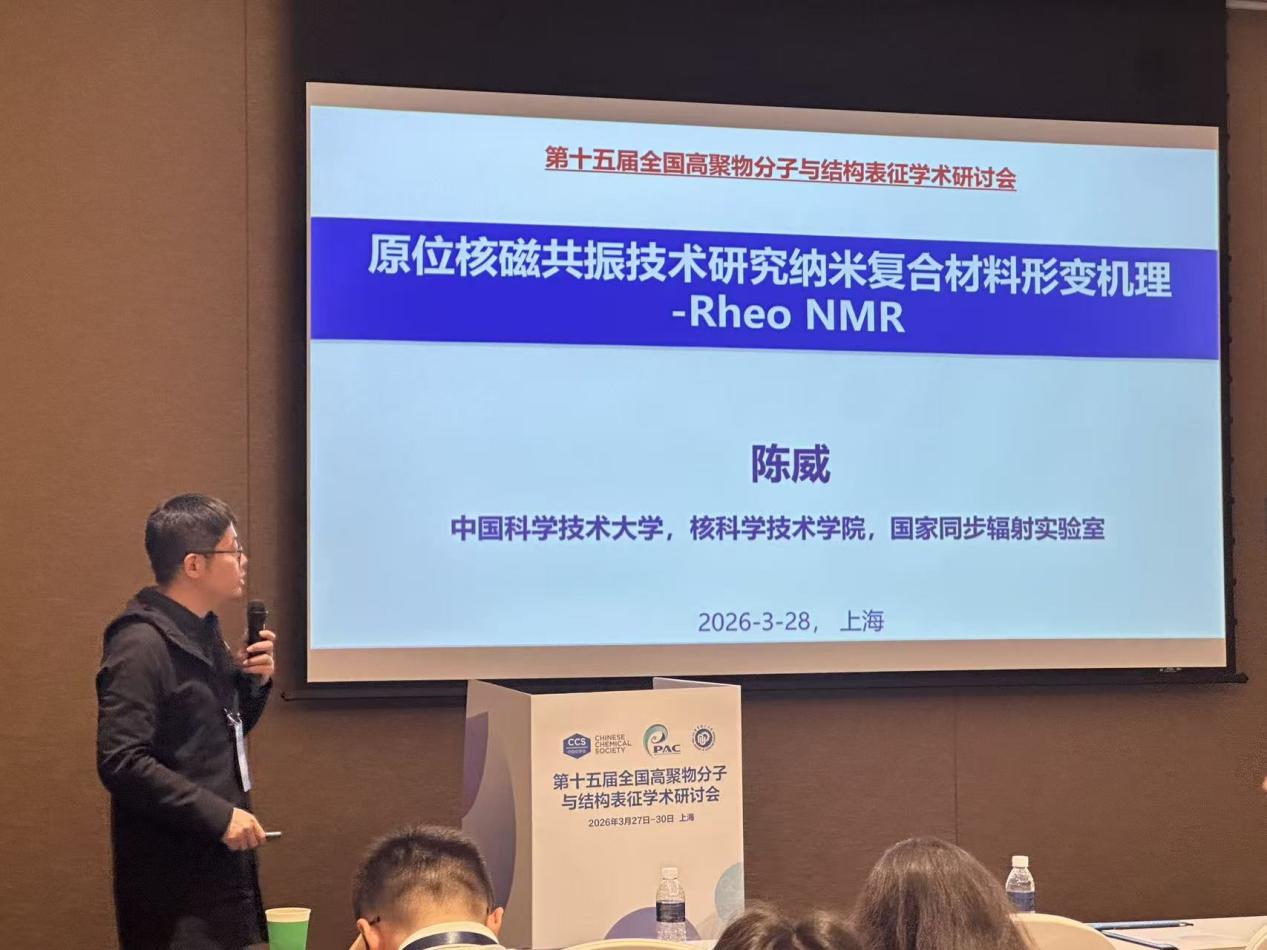
Professor Wei Chen presented a report entitled “Investigating the Deformation Mechanism of Nanocomposites by In Situ Nuclear Magnetic Resonance Techniques.” Starting from the development of polymer network elasticity theory, the report pointed out that decoupling chain orientation from chain stretching is crucial to understanding deformation mechanisms. The team developed a low-field NMR in situ tensile device and used the relaxation information from solid-state NMR to quantitatively characterize the orientation of amorphous chain segments and the micro-deformation of locally constrained network chains. Their study revealed that the macroscopic stress-softening behavior at small strain originates microscopically from the orientational rearrangement and energy dissipation of locally constrained network chains, thus providing an in situ, multiscale characterization approach for studying deformation mechanisms in nanocomposites.
Professor Yanan Ye delivered a presentation entitled “Elastic Mechanisms and Large-Deformation Behavior of Gel Networks Containing Dynamic Bonds.” Addressing the challenges posed by highly tough gels with dynamic bonds—such as low structural order, the coexistence of multiple relaxation processes, and the difficulty of structural characterization and theoretical description during large deformation—Professor Ye and her students carried out systematic studies on the chain-relaxation dynamics of gels, the mechanisms of structural evolution under large deformation, and the oriented design of functional materials. By combining in situ synchrotron radiation methods, the team established an equivalence model of temperature and concentration effects on gel-network relaxation, clarified the mechanism of structural evolution under large deformation, revealed the microscopic energy-dissipation mechanism associated with the reversible breaking and reformation of dynamic bonds, and further expanded the application of high-strength, high-toughness gels in nuclear-safety emergency fields such as uranium extraction from seawater.