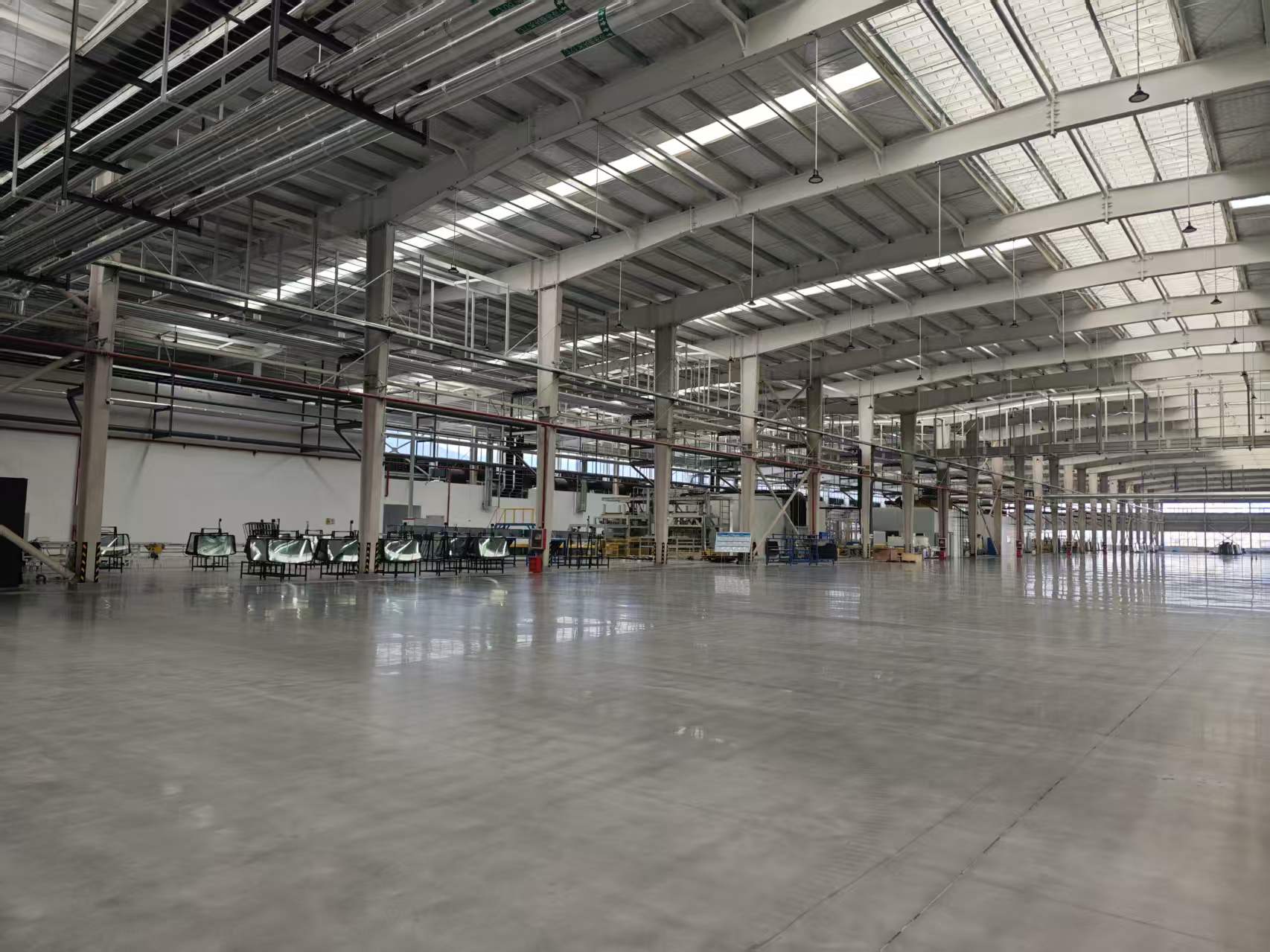
On March 4, 2026, the student team of the “Double Helix” Innovation Talent Cultivation Program at the Anhui Provincial Engineering Research Center for Advanced Functional Polymer Films, University of Science and Technology of China, visited Mingchi Glass (Anhui) Co., Ltd. for an on-site tour and technical exchange. The team went deep into the full-process production workshops for automotive laminated glass to systematically study industrial manufacturing processes and key technical pain points. They also held in-depth discussions with the company’s technical team on topics such as numerical simulation and the use of simulation technologies to empower materials research and development as well as process optimization, clarifying directions for subsequent industry-university-research collaboration. The Technical Director of Mingchi Glass, together with key personnel from the R&D and production departments, accompanied the visit and participated in the discussions.
The faculty-student team visited core production sections including raw automotive glass cutting and edge grinding, tempering, PVB interlayer film lay-up, vacuum pre-pressing, autoclave curing, optical inspection, and finished-product assembly. Drawing on actual production-line practices, the company’s technical staff explained in detail the key process-control points for automotive laminated glass from raw materials to finished products, with a focus on core technical aspects such as regulating the bonding strength between PVB film and glass, matching autoclave temperature-pressure curves, and edge sealing to prevent delamination. The students gained an intuitive understanding of the manufacturing differences among various specifications of automotive windshields and side-window glass, as well as the stringent industry standards for automotive glass in terms of passive safety, optical performance, weather resistance, and durability. This gave them a more concrete understanding of the industrial value of PVB film as the core functional layer in laminated glass.
At the technical exchange meeting, the head of R&D at Mingchi Glass systematically reviewed the core technical pain points currently facing the industry. First, it is difficult to precisely control the wedge angle of HUD head-up display windshields, which can easily lead to optical distortion, ghost images, and other problems. Existing process tuning relies heavily on experience, resulting in long development cycles and high trial-and-error costs. Second, new energy vehicles are placing increasingly high demands on glass in terms of sound insulation, heat insulation, and lightweighting, while traditional PVB films struggle to satisfy multiple performance requirements simultaneously. Third, high-end automotive glass requires increasingly strict surface flatness and color-difference consistency, and the stability of existing production processes still needs further optimization.
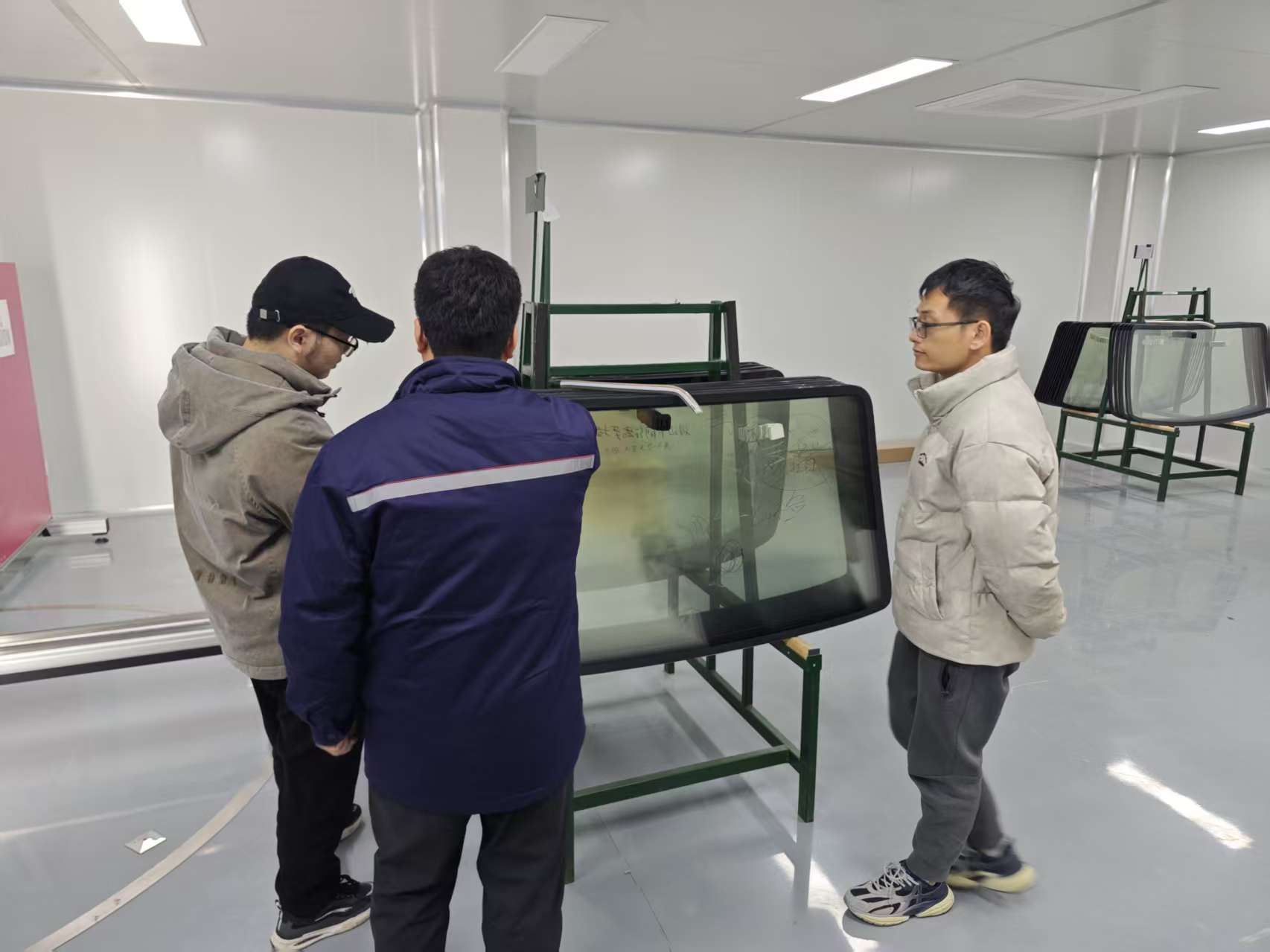
In response to these pain points, the student team proposed targeted collaboration ideas based on the Engineering Center’s technical strengths in synchrotron radiation in-situ characterization, finite element simulation, and optical simulation. The team indicated that by establishing a numerical model for the high-temperature and high-pressure lamination process of PVB films, they could simulate film-flow behavior and stress-distribution patterns, optimize autoclave process parameters, and reduce defects such as bubbles and warpage during lamination. Meanwhile, optical simulation of the wedge angle in HUD glass could be carried out to provide theoretical support for product-structure design and process-parameter adjustment, thereby significantly shortening the R&D cycle. The two sides also exchanged views on extended topics such as fire-performance simulation for photovoltaic laminated glass and simulation of low-temperature forming processes.
This exchange enabled the student team to engage closely with the real needs of the automotive glass industry and gain a deeper appreciation of the important role of simulation technologies in solving practical industrial problems. The Anhui Provincial Engineering Research Center for Advanced Functional Polymer Films has always upheld an educational philosophy guided by industrial needs. Through a practice-oriented model of “entering enterprises and engaging with the frontline,” the Center guides students in transforming theoretical knowledge into engineering application capabilities, continuously deepens the effectiveness of industry-university-research collaborative education, and cultivates innovative talent in the field of polymer materials with both solid theoretical foundations and practical capabilities.