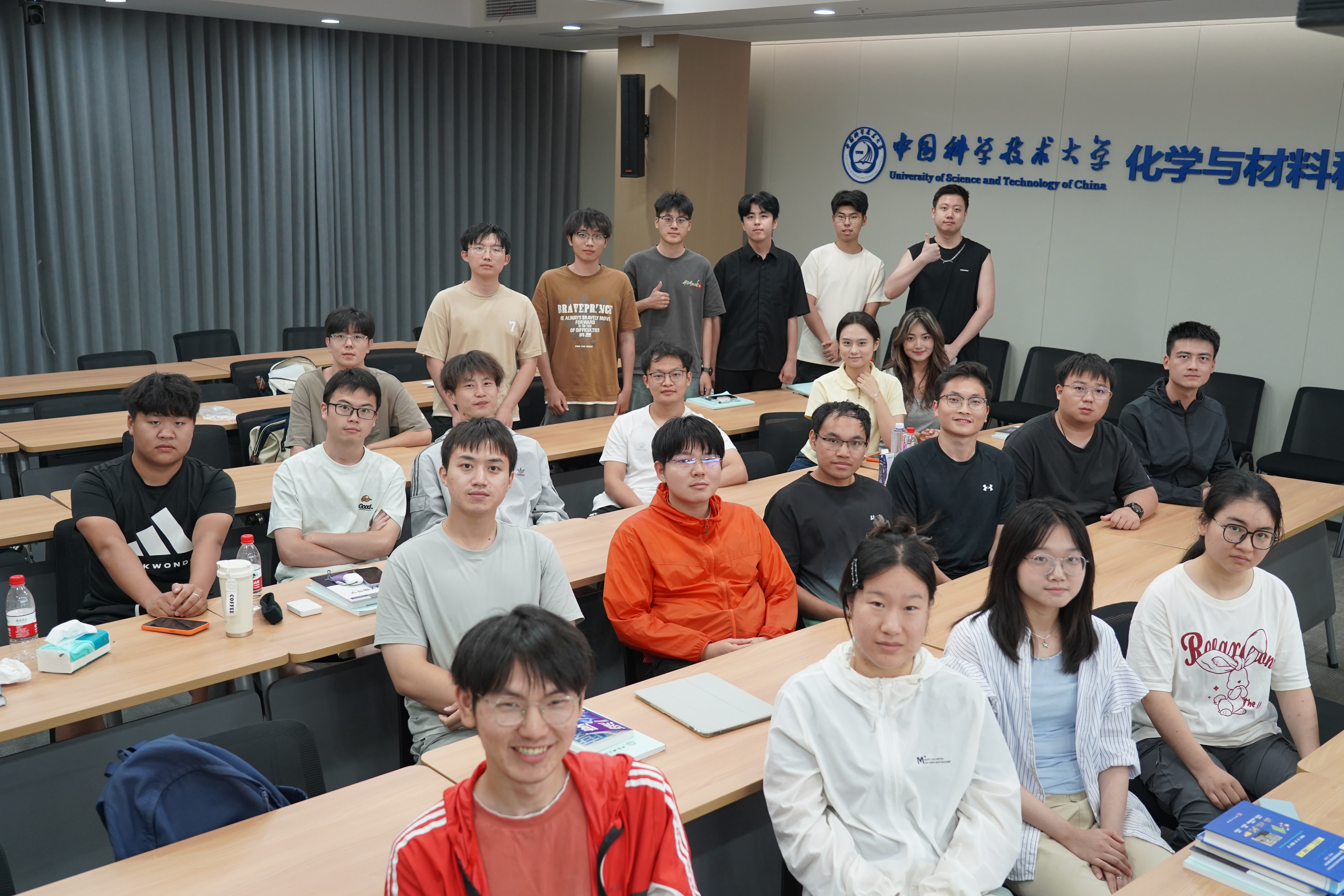
After successfully completing the first week of training on laboratory regulations and safety education, the laboratory continued its second week of orientation training for the incoming class of 2026 from July 14 to 18. Centered on the themes of “deepening theoretical knowledge, strengthening practical skills, and broadening academic horizons,” this week’s program covered polymer theory, patent drafting standards, hands-on instrument training, international academic exchange, and other modules, building a bridge from fundamental knowledge to scientific research practice for the new students.
I. Deepening Theoretical Knowledge: Advancing Both Polymer Fundamentals and Frontier Research
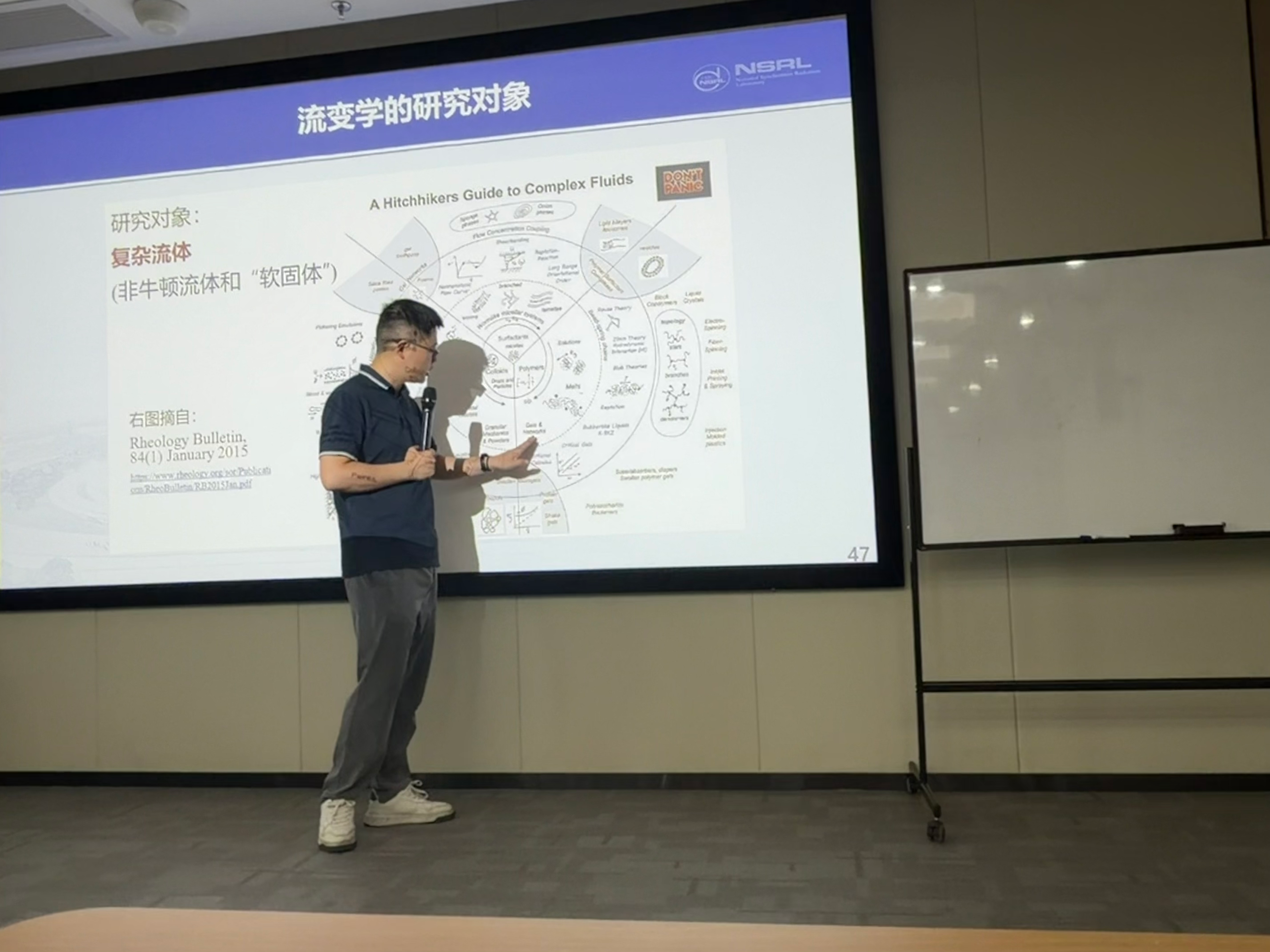
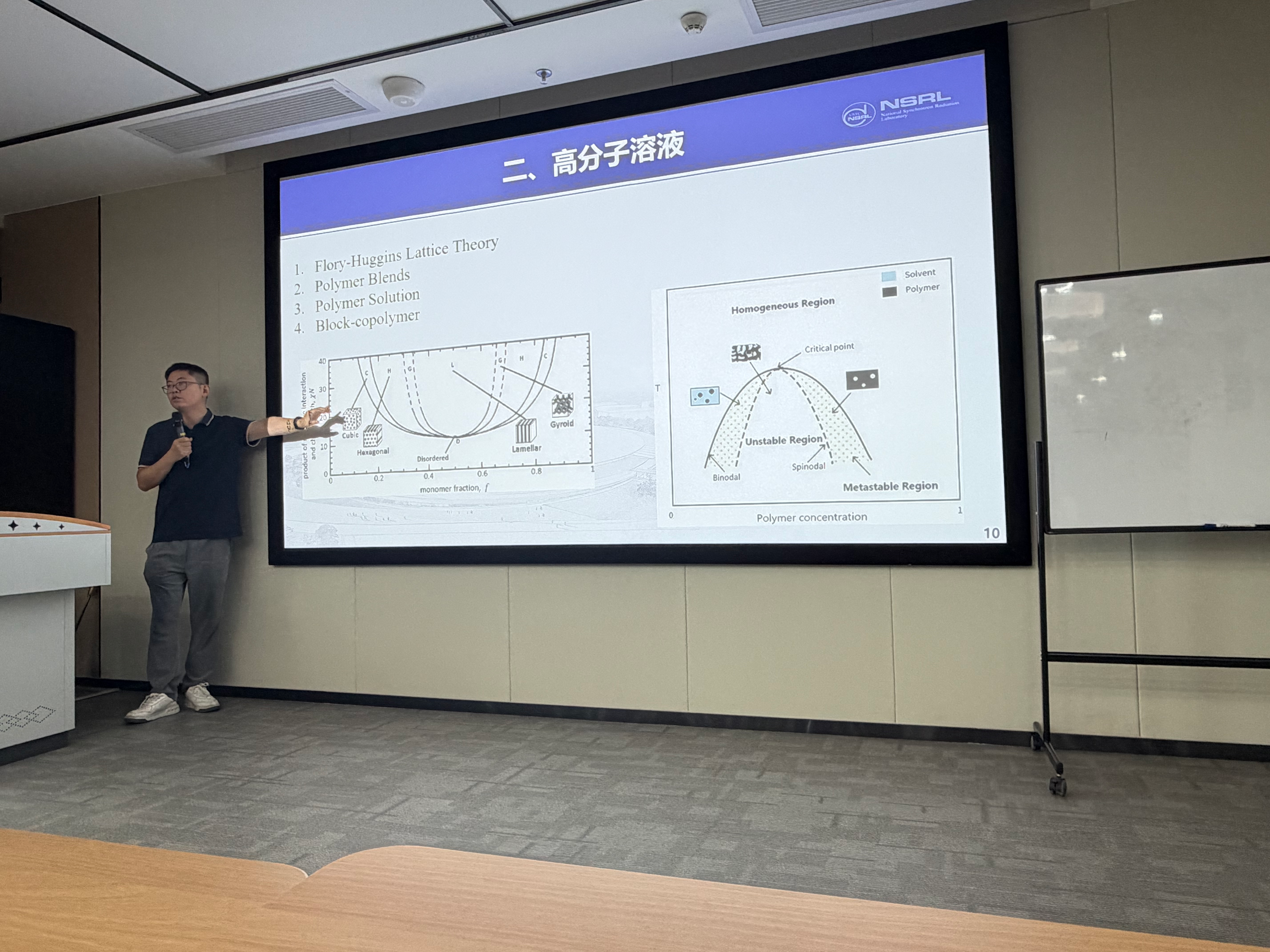
On the morning of July 14, Chen Wei continued the fundamental knowledge training from the first week and delivered another core course on polymer physics to the new students in Classroom A519. Beginning with polymer solution theory, Chen provided a systematic explanation of key topics including the Flory–Huggins lattice theory, polymer blend systems, the self-assembly of block copolymers, and phase-separation behavior in polymer solutions. By introducing concepts such as the binodal curve, spinodal curve, and critical point in phase diagrams, he guided the students in developing a thermodynamic framework for understanding the behavior of polymer solutions.
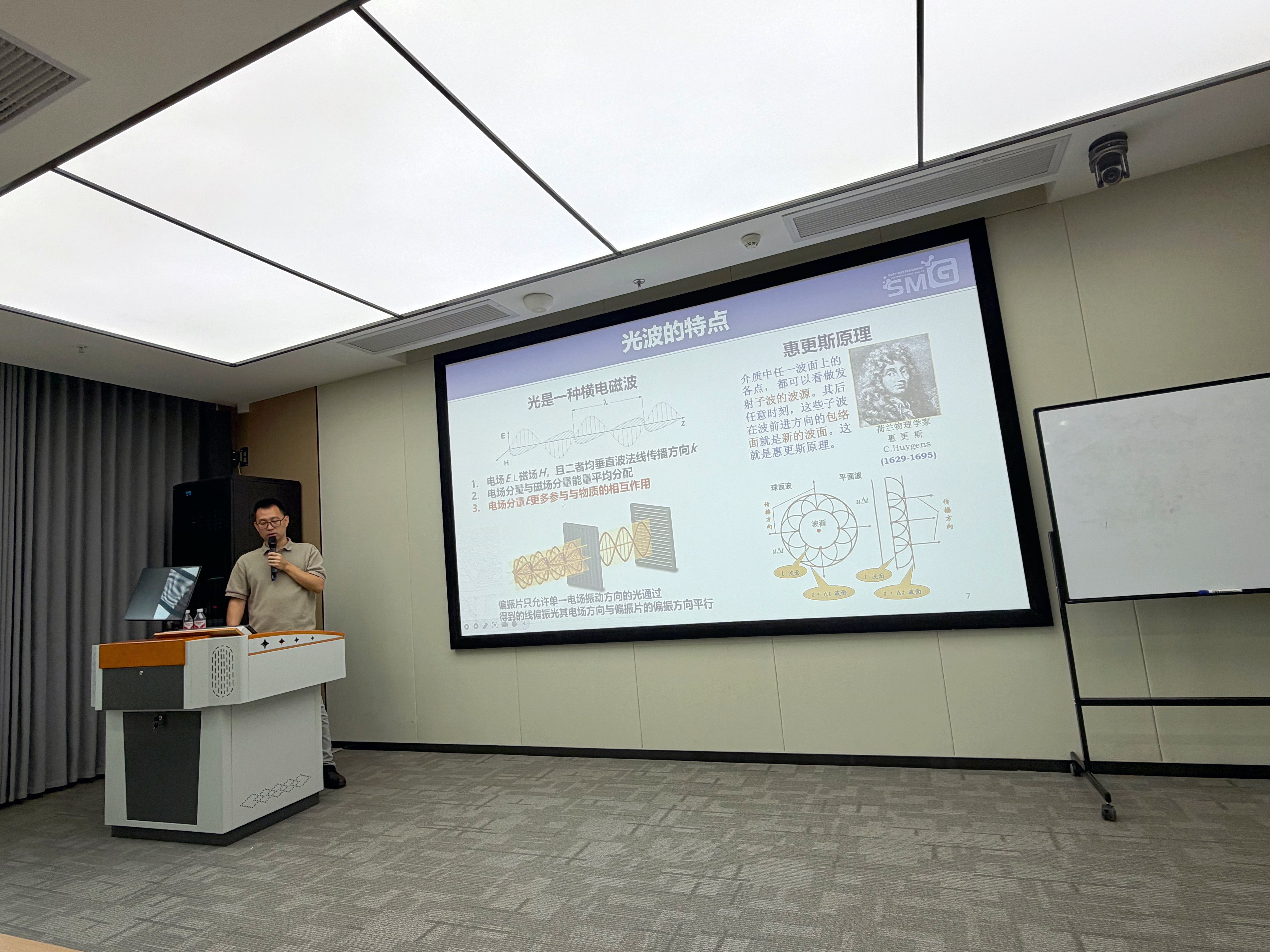
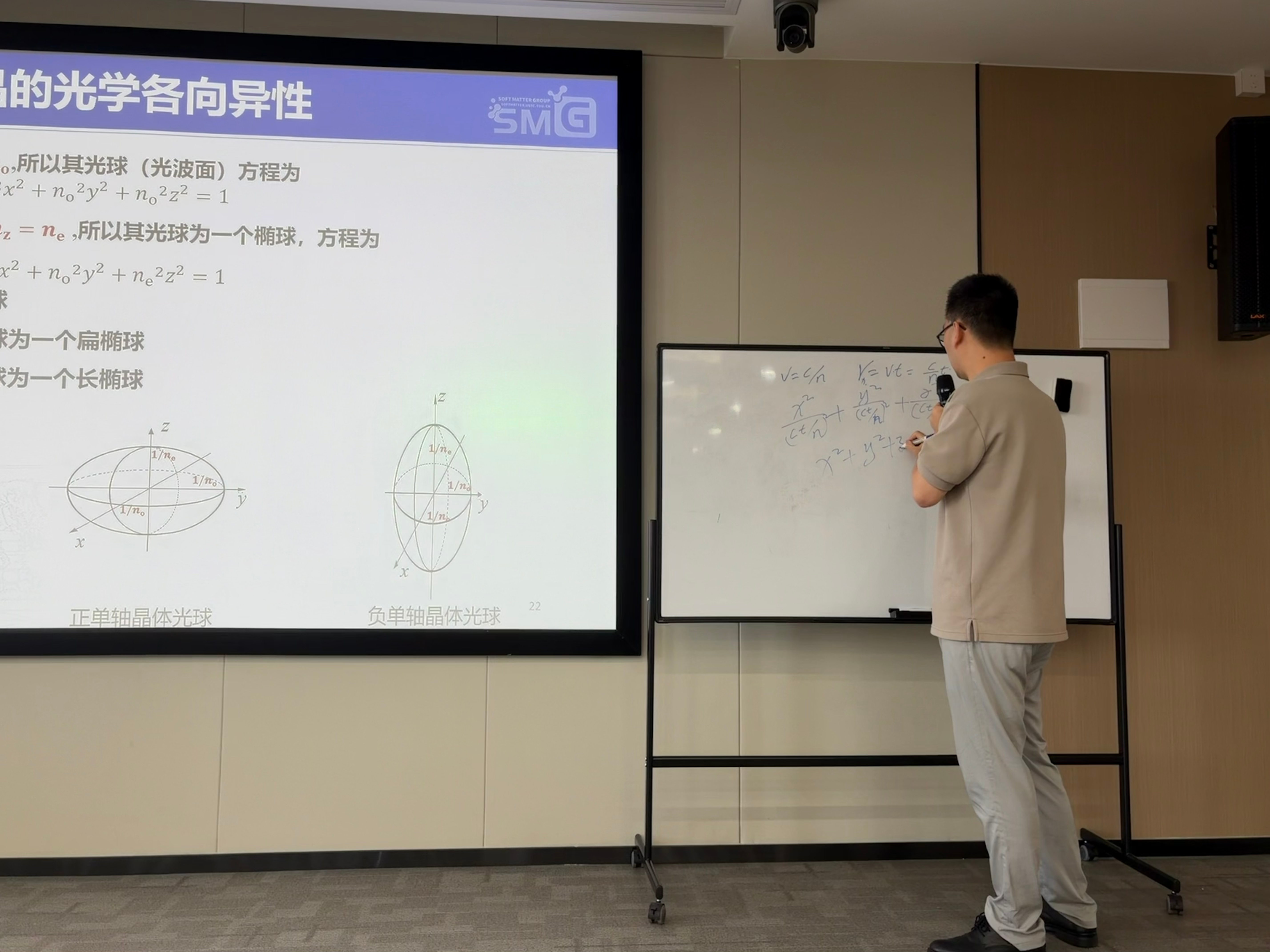
On the morning of July 16, Gao Jianwei delivered a special lecture titled “Principles of Phase Compensation in Displays.” Starting from the fundamental principles of polymer optical films, Gao provided an in-depth explanation of their application mechanisms in liquid-crystal display technology. The lecture gave the students a more intuitive understanding of how the laboratory’s research achievements are translated into practical applications in the display industry and further broadened their academic horizons.
II. Patent Training: Raising Awareness of Intellectual Property Protection
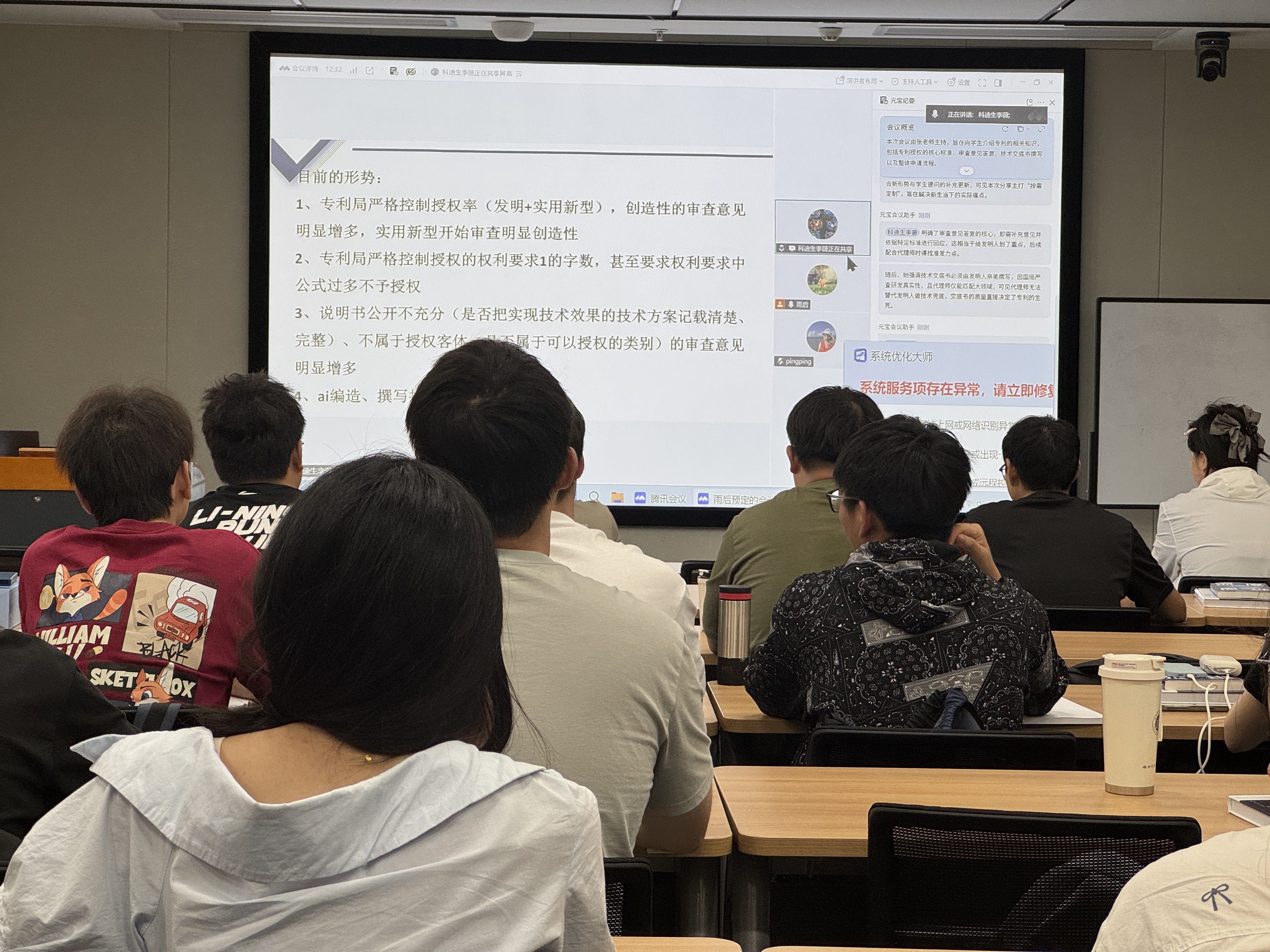
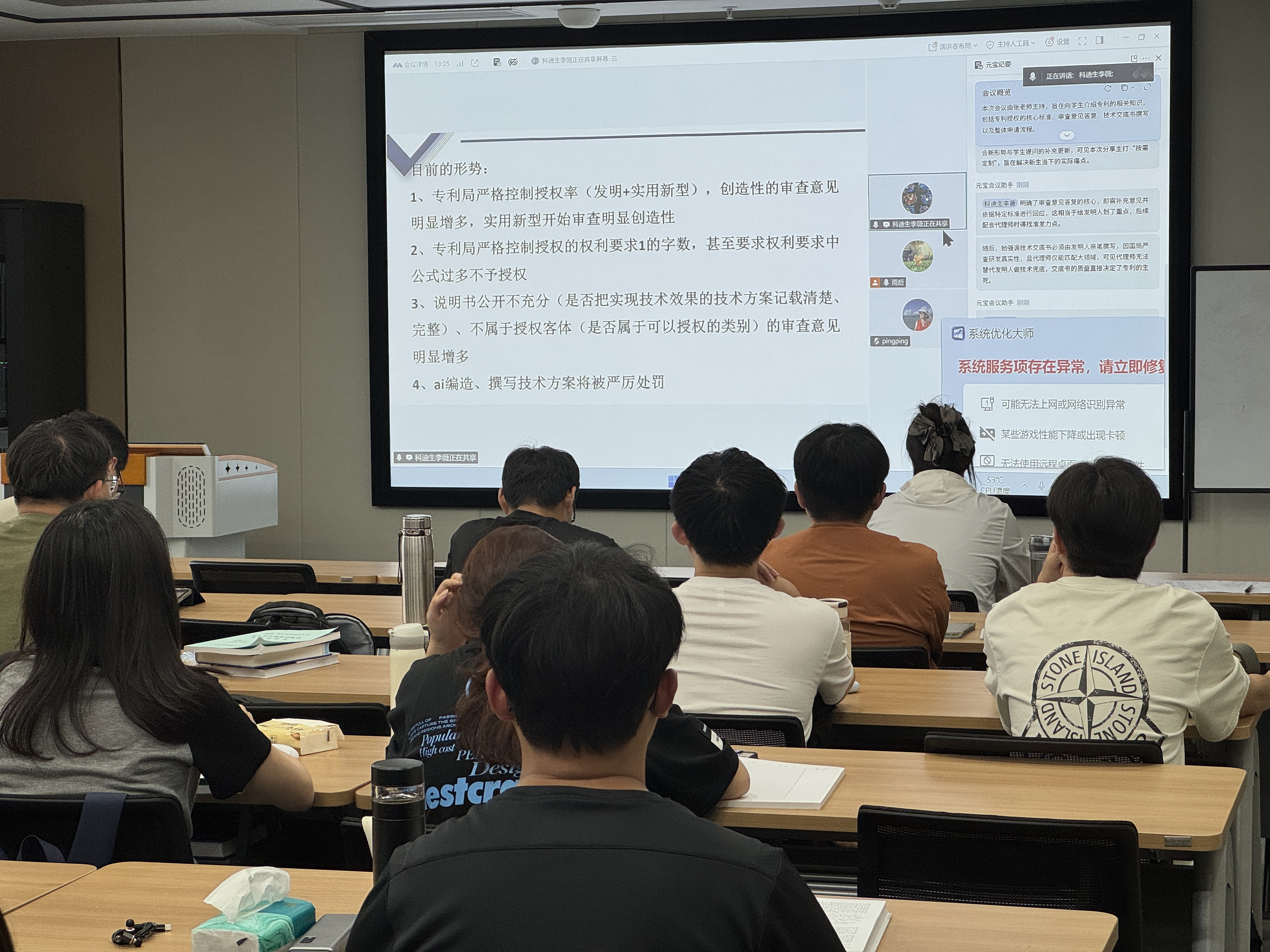
On the afternoon of July 14, the laboratory invited Li Wei from the Beijing Kedisheng Patent Agency to conduct a special training session on patent drafting for the new students. The training was delivered online, with Li teaching remotely through Tencent Meeting.
Drawing on recent changes in the examination policies of the China National Intellectual Property Administration, Li systematically reviewed current trends in patent examination. On the one hand, the patent office continues to exercise strict control over the grant rates of invention patents and utility models, with examination of the inventiveness of patent claims becoming notably more stringent. On the other hand, utility models are also entering a stage in which their inventiveness is subject to more substantive examination. Li particularly emphasized that fabricating or drafting technical solutions using AI would be subject to severe penalties. She reminded the students that they must uphold originality throughout the research process and develop a standardized and rigorous approach to patent drafting.
III. Hands-on Instrument Training: Moving from the Classroom to the Laboratory
This week’s instrument operation training covered a broader range of equipment and placed greater emphasis on hands-on practice. Under the guidance of instructors from the respective laboratories, the new students visited Laboratories C103, C104, D104, and other facilities in groups to learn about the equipment and receive practical operational training.
On the evening of July 14, Wang Yuhao instructed the new students in Laboratory C104 on the operation of the UV spectrophotometer and spectral haze meter. On the afternoon of July 15, Xue Heng introduced the rotational rheometer, Li Xiang the blown-film machine, Fang Xingyue the infrared spectrometer, and Lei Zhouhang the phase retardation measurement instrument. Each instructor explained the operating principles of the respective equipment in detail and conducted practical demonstrations in the laboratory. On the afternoon of July 16, Wang Yuhao instructed the students in Laboratory D104 on the use of infrared drying lamps, ultraviolet drying lamps, and the slot-die coater. On the morning of July 17, Jia Yifan, Tong Xiaoyi, and Kang Wenqi led hands-on training sessions in Laboratory C104 on the contact-angle measuring instrument, universal testing machine, and dynamic mechanical analyzer, respectively. On the morning of July 18, Zhang Jiachen and Zheng Mengyuan continued the training by introducing the differential scanning calorimeter and surface tensiometer, helping the students learn about thermal analysis and surface-property characterization. Li Xiang provided an in-depth explanation of the water-vapor transmission rate tester and gas permeability tester for characterizing film barrier properties, while Zhang Can introduced the ellipsometer for optical-film characterization.
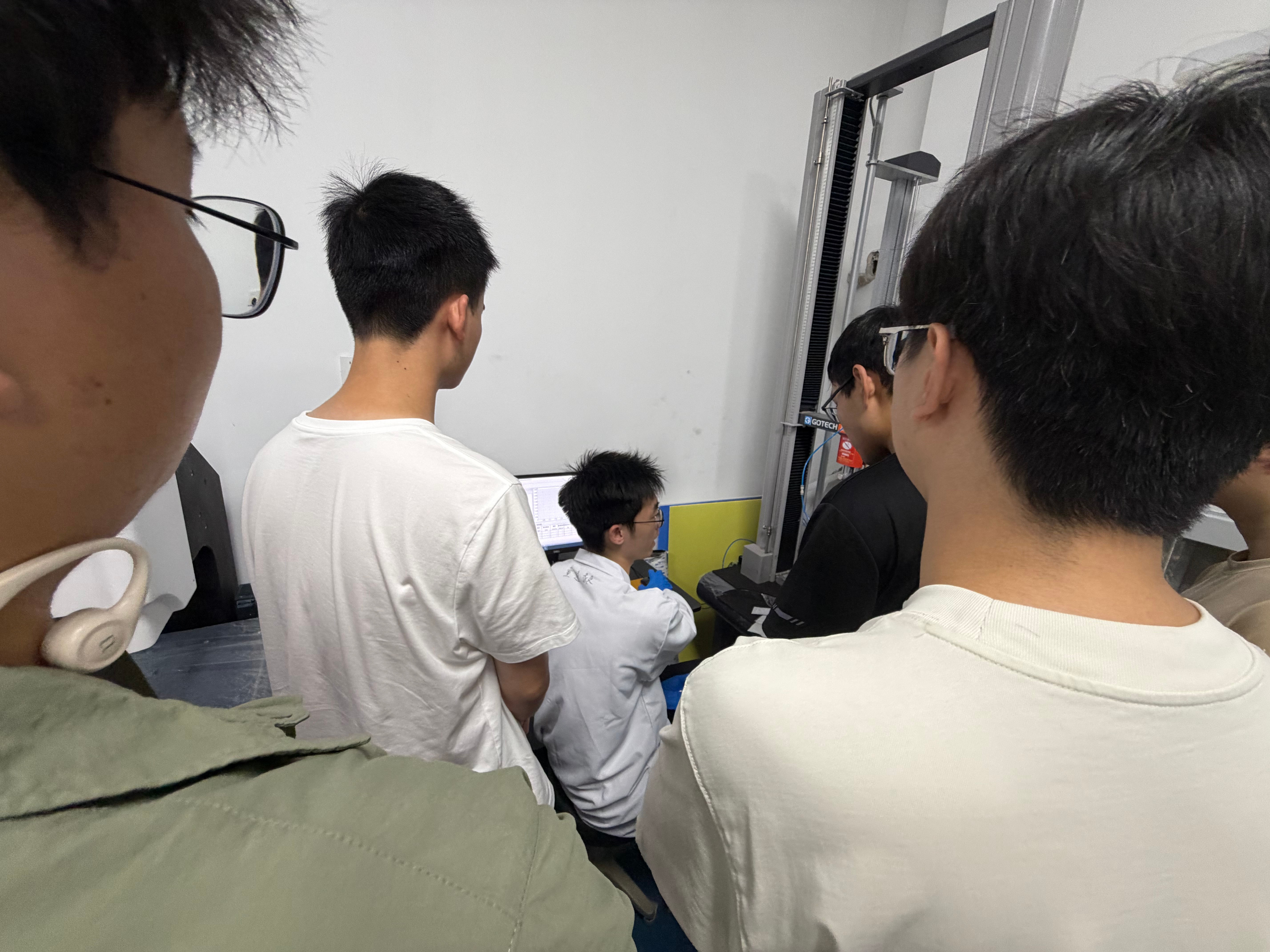
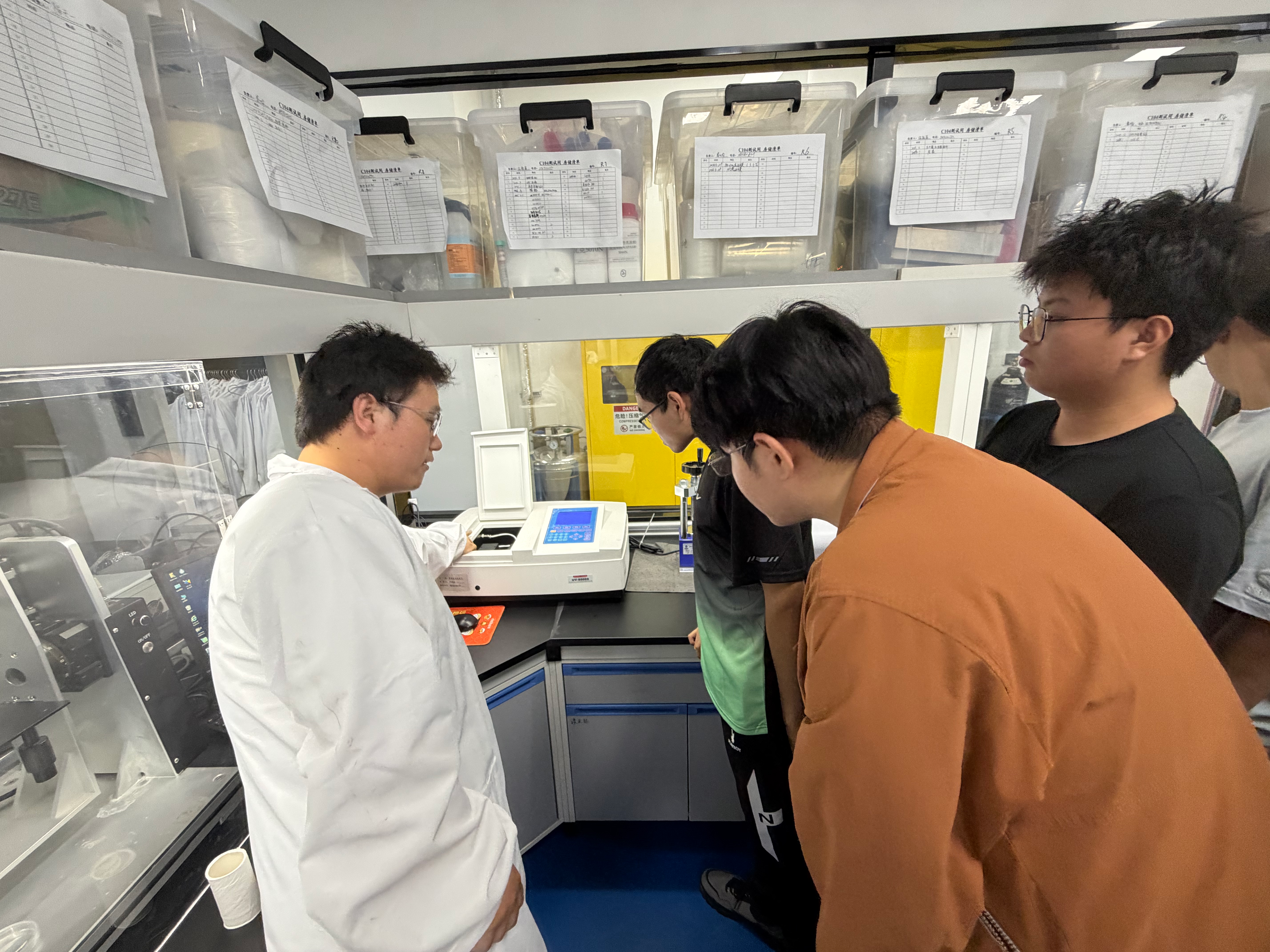
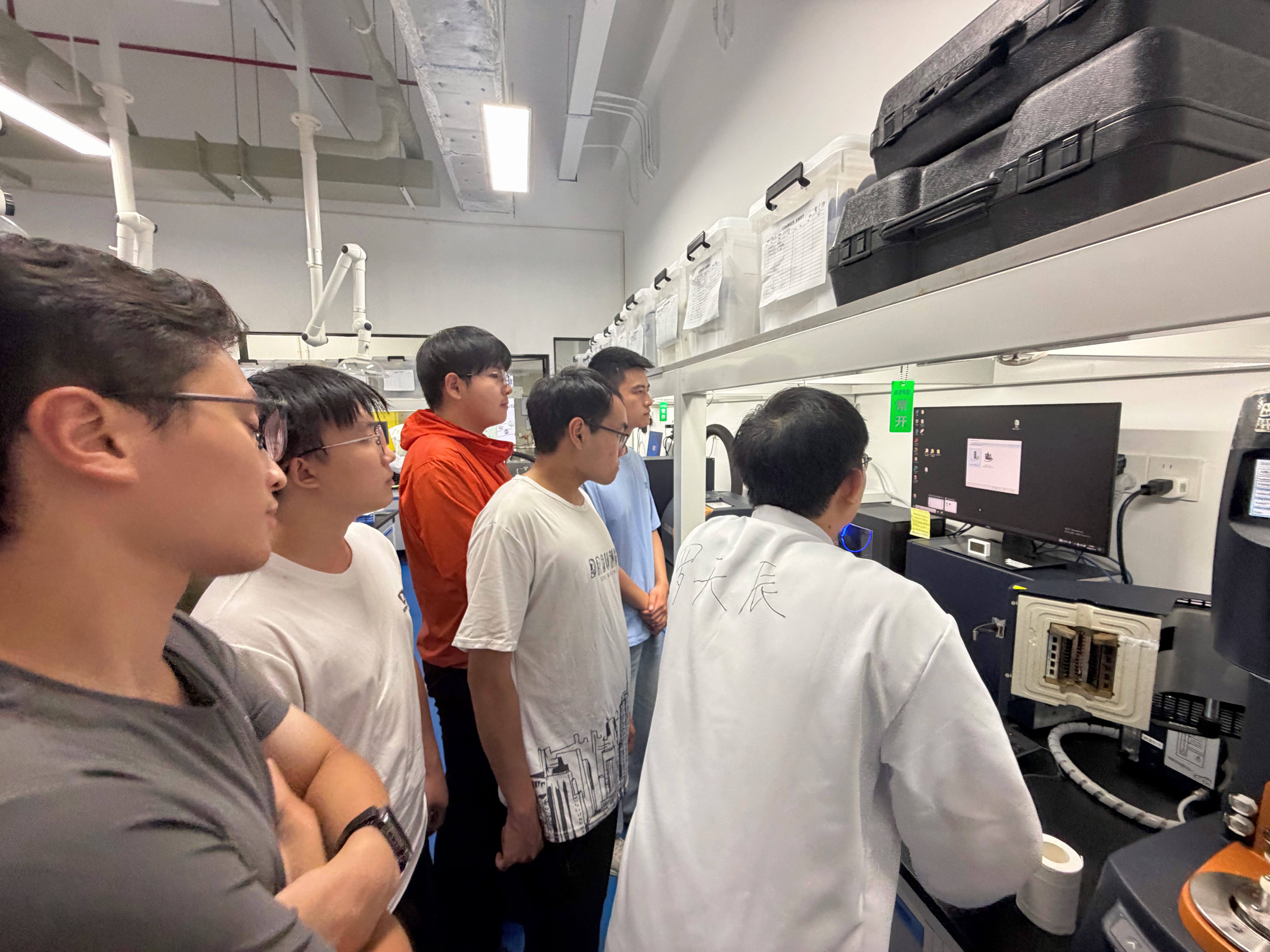
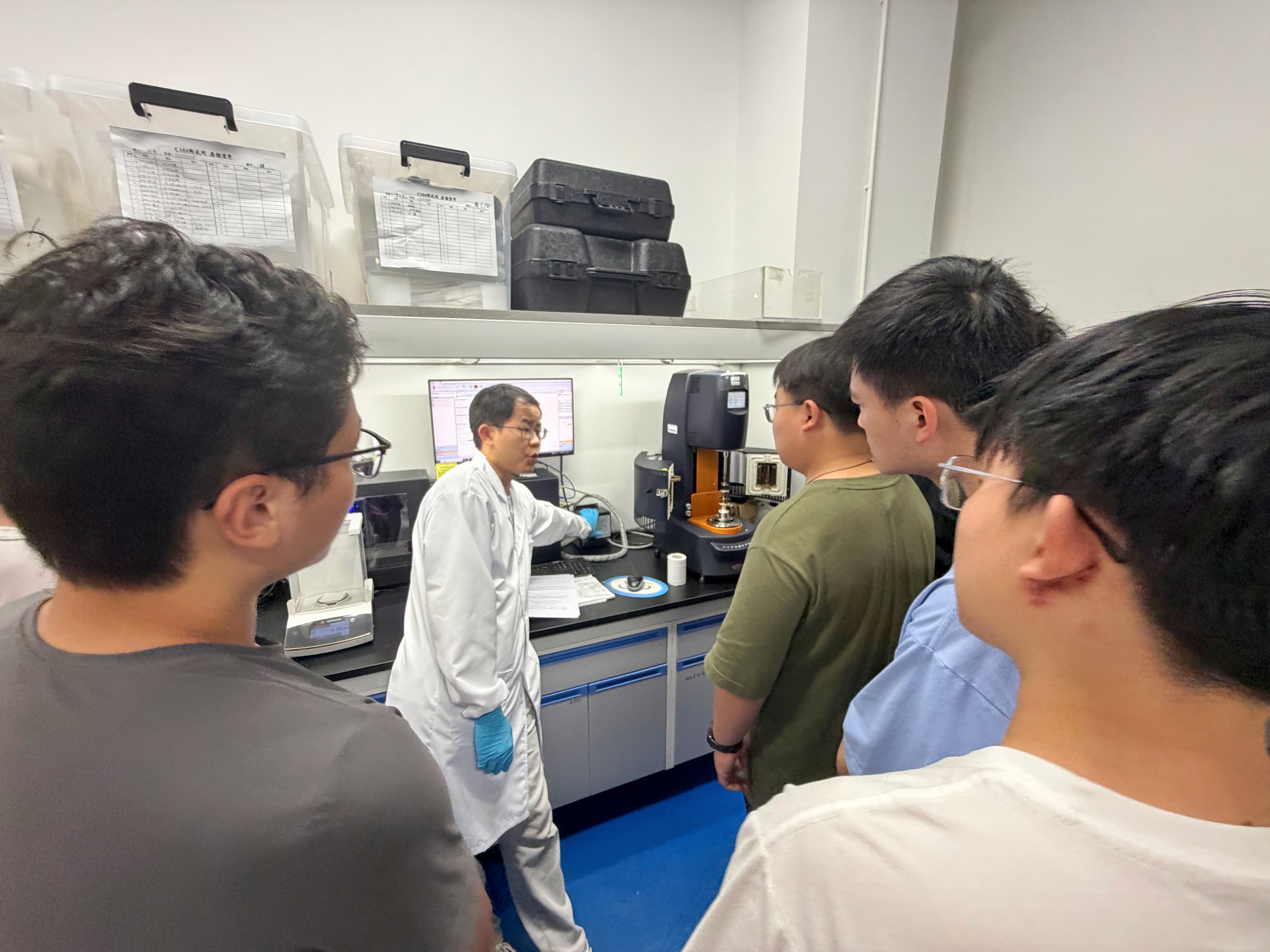
During the on-site laboratory instruction, the instructors patiently demonstrated every step of the operating procedures. The new students observed the demonstrations at close range and participated actively, creating an engaging learning atmosphere and effectively connecting theoretical knowledge with practical application.
IV. Academic Exchange: Inspiring New Ideas through Diverse Perspectives
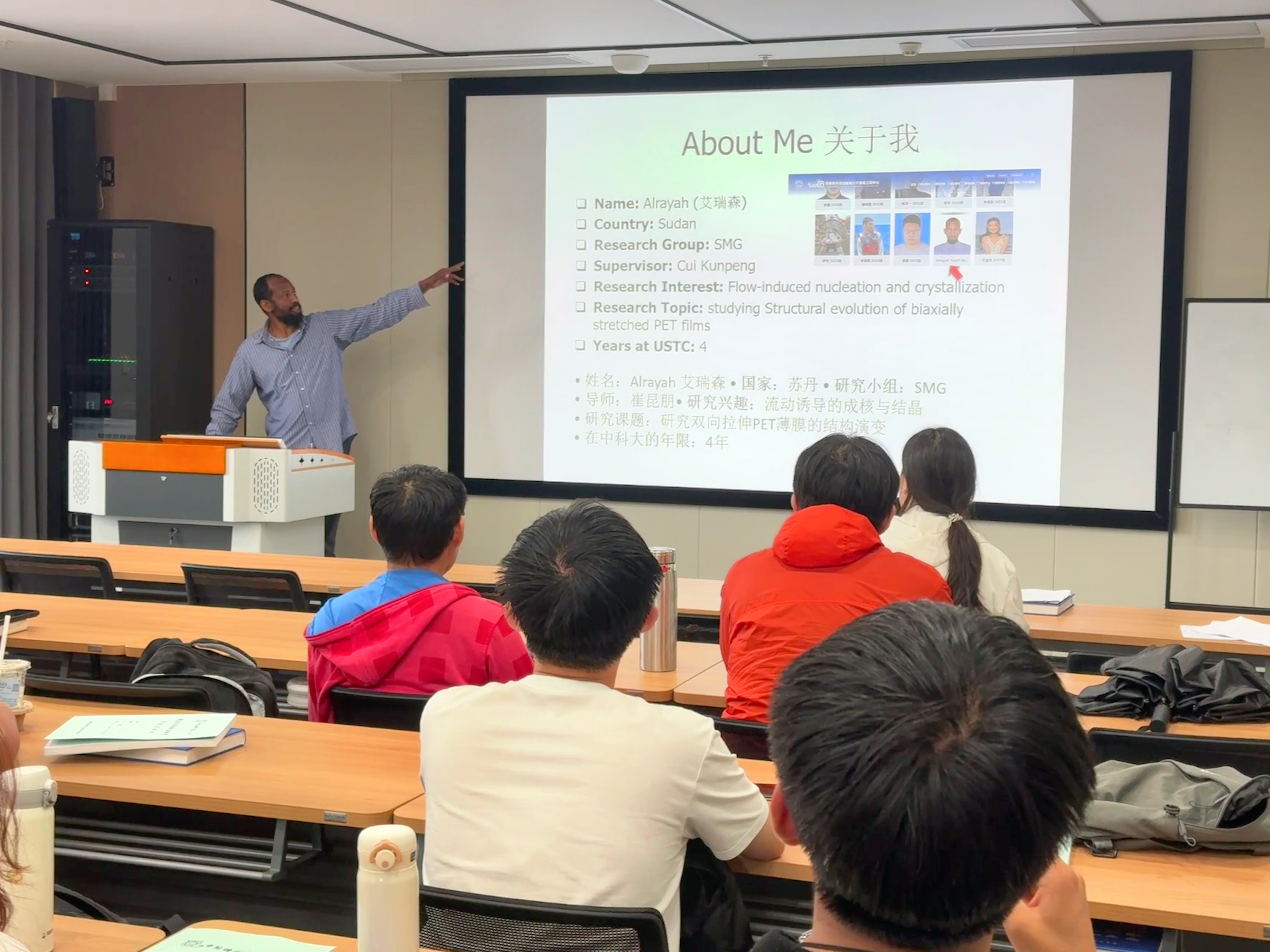
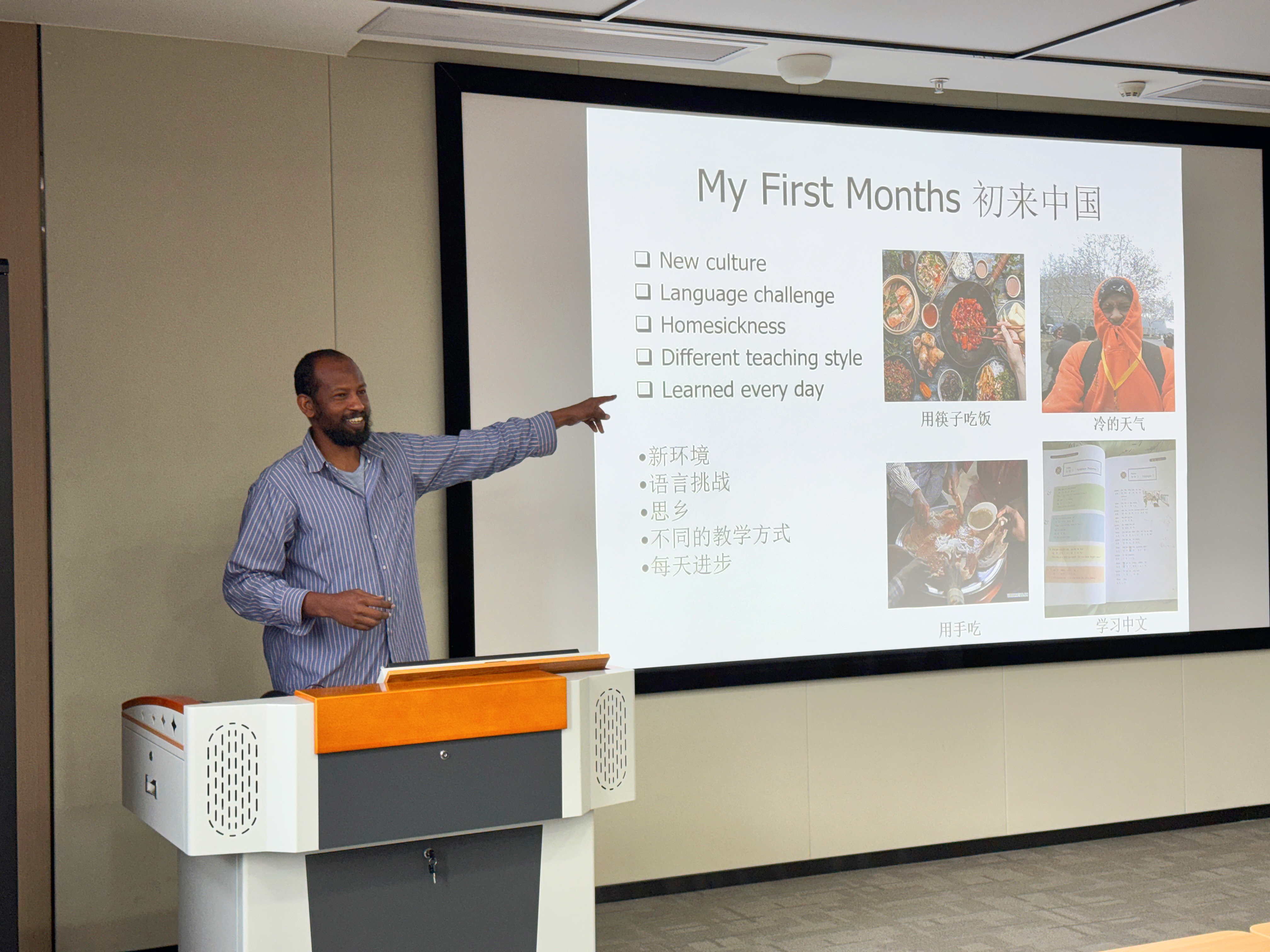
This week’s academic exchange sessions featured a variety of highlights. On the afternoon of July 16, international PhD student Alrayah delivered a presentation titled “My Studies in China” to the new students. Speaking with humor and sincerity, Alrayah described his experience of adapting to a new culture, language challenges, homesickness, and different teaching methods after arriving in China, as well as his positive attitude of “learning every day.” He also shared four reasons for choosing to join SMG: its excellent research platform, supportive mentoring team, collaborative environment, and opportunities for personal and academic growth. His presentation strongly resonated with the students and gave the new members greater confidence and motivation.
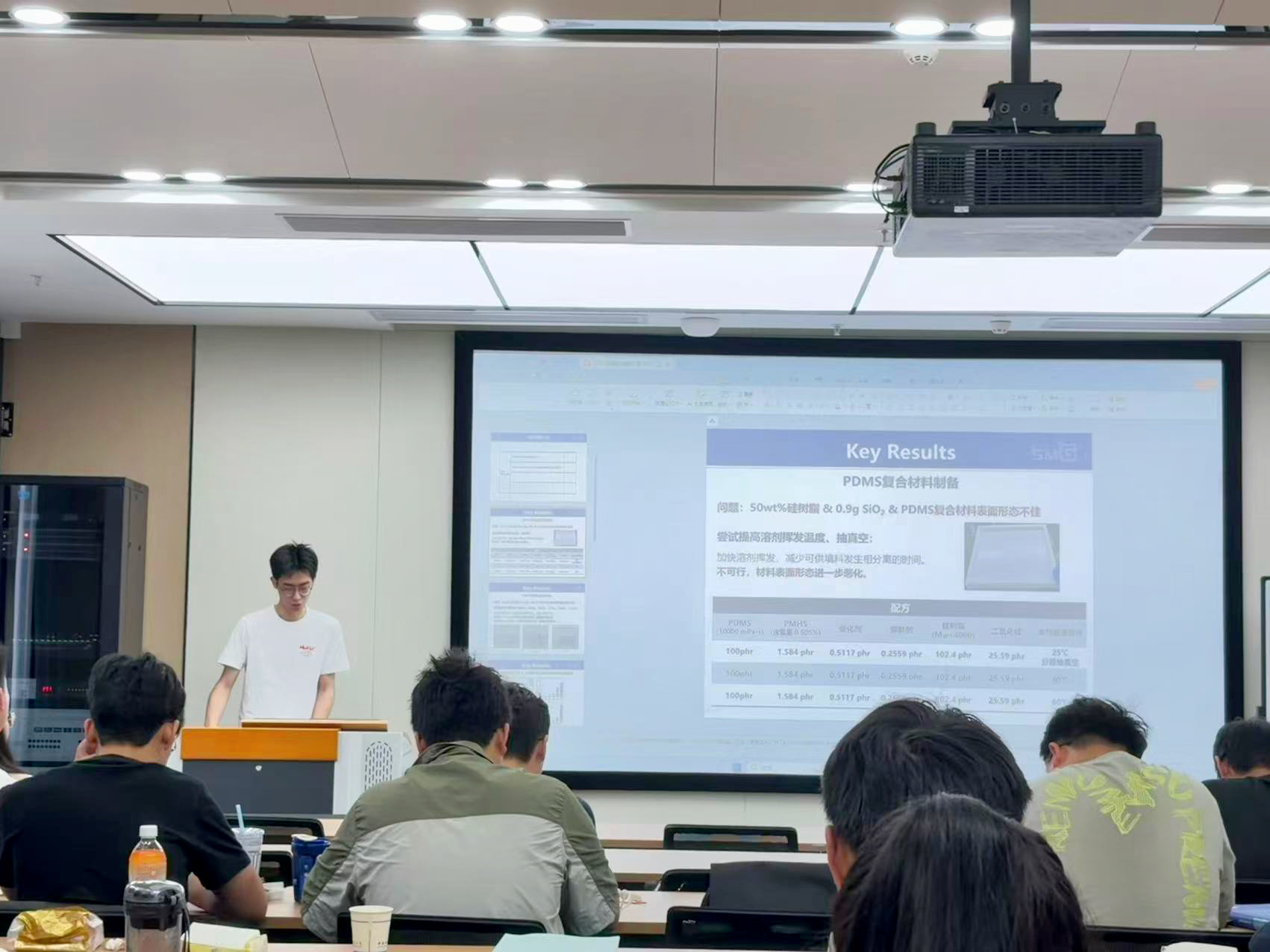
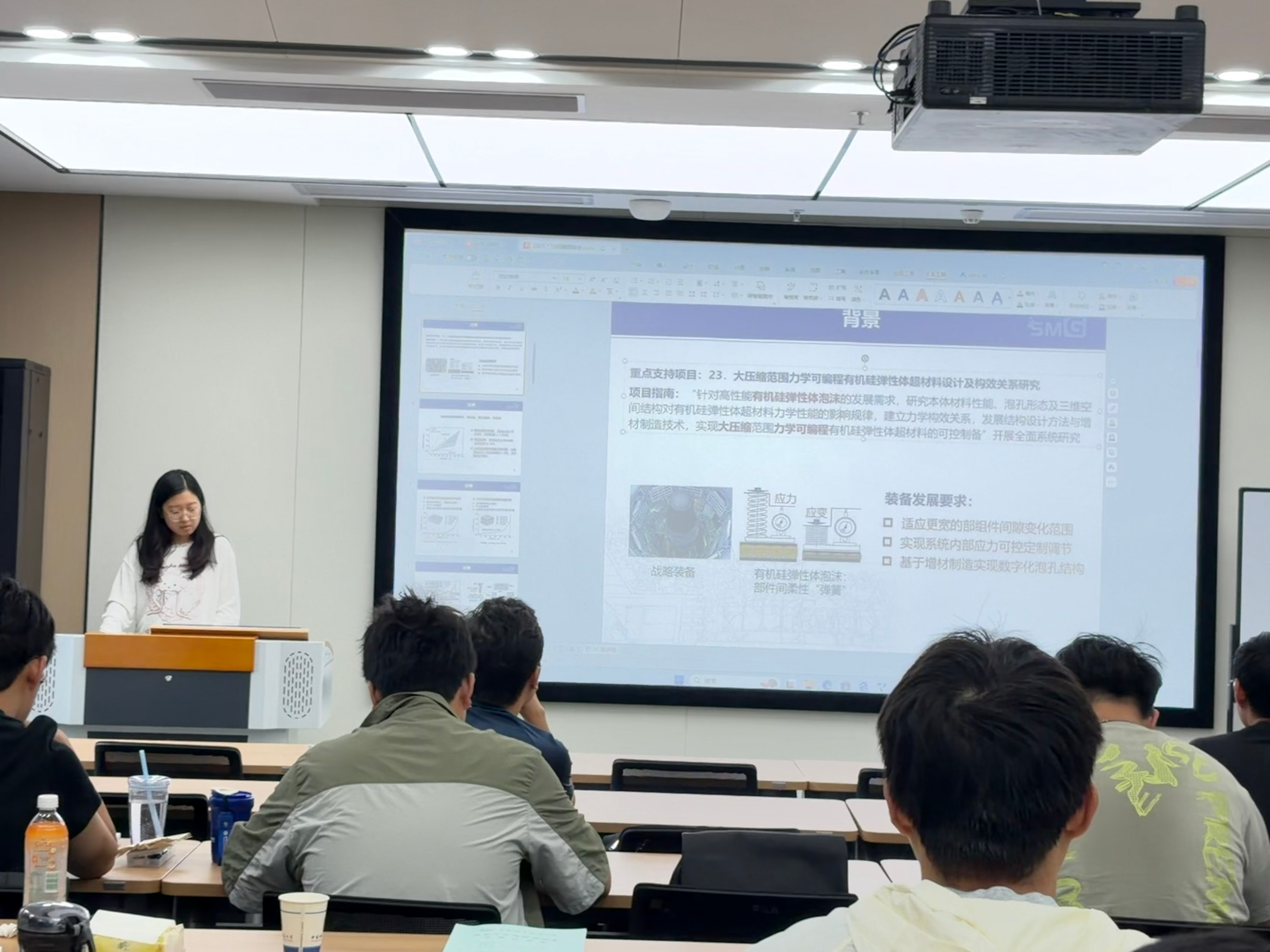
In addition, the research groups continued to organize a number of group meetings throughout the training period. On the afternoon of July 17, the Hydrogel Research Group held a group meeting, during which the new students listened to presentations on the research progress of senior group members. That evening, the Biaxial Stretching Research Group and the Uranium Extraction from Seawater Research Group held separate thematic meetings. On the evening of July 18, the PVB Research Group and NMR Research Group also held their respective meetings. By participating in academic exchanges across different research areas, the new students further deepened their understanding of the laboratory’s various research programs and began to integrate into the academic environment of their research teams.
V. Conclusion
Building on the first week’s training in laboratory regulations and safety education, the second week further deepened the program and brought its content closer to actual research practice. From polymer solution theory to the principles of phase compensation in displays, from patent drafting standards to hands-on training with more than ten types of specialized instruments, and from international academic presentations to group meetings across different research teams, the new students continued to enrich their knowledge through a week of intensive learning. Their research literacy and practical capabilities were both significantly strengthened.
The two-week training program has now concluded successfully. The new students not only acquired the theoretical knowledge and practical skills required to begin working in the laboratory, but also developed a clearer sense of their research directions and belonging through exchanges and interactions with the different research groups. We look forward to seeing the incoming class of 2026 approach their future research journey with greater enthusiasm and a stronger foundation, grow steadily, and pursue innovation in the fertile research environment of the laboratory.