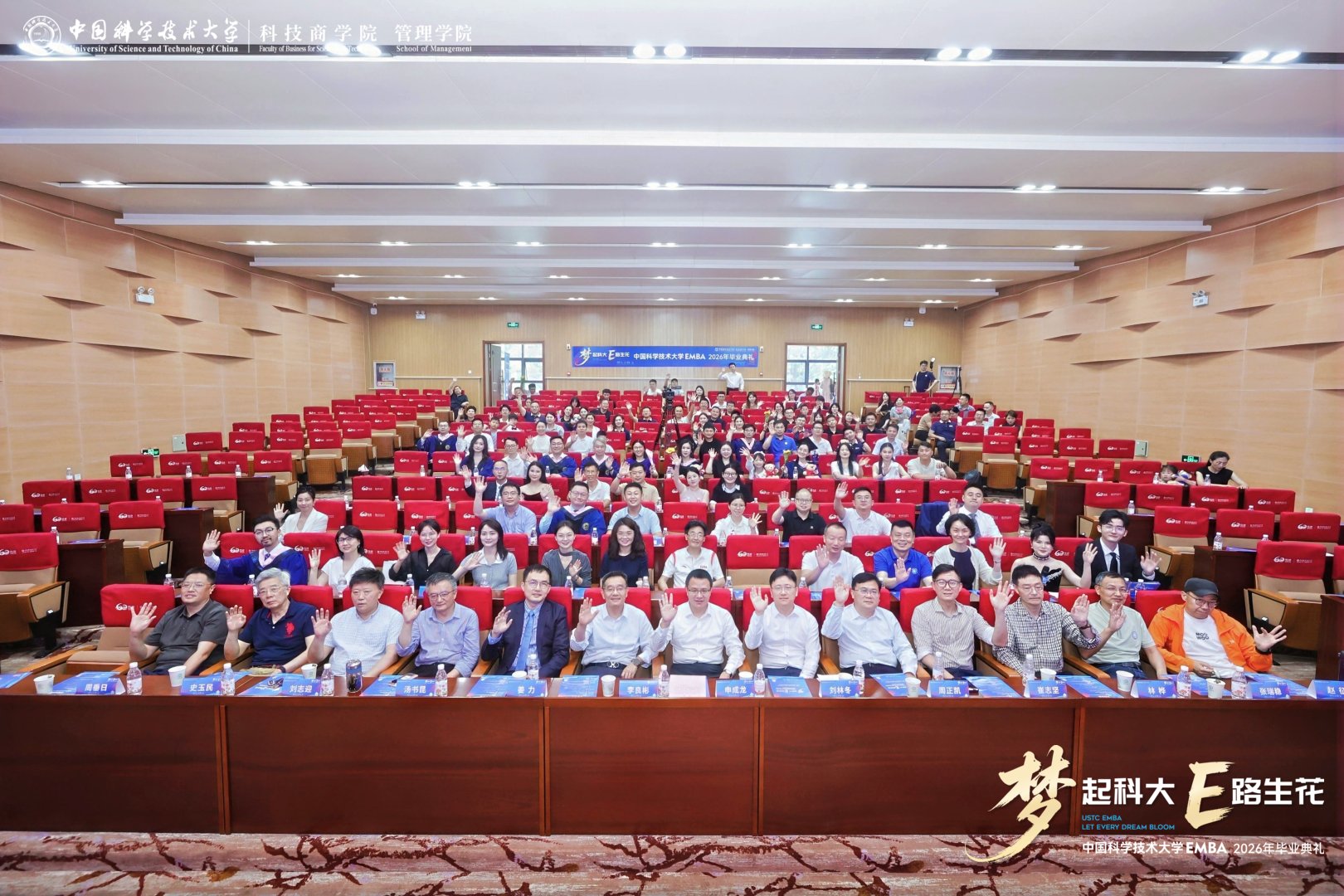
On June 27, 2026, the 2026 EMBA graduation ceremony of the School of Science and Technology Business and the School of Management at the University of Science and Technology of China was held in grand style. Professor Li Liangbin, Party Secretary and Executive Dean of the School of Nuclear Science and Technology, Executive Dean of the School of Future Energy, Party Secretary and Deputy Director of the National Synchrotron Radiation Laboratory, and Deputy Commander-in-Chief of the Hefei Advanced Light Facility, attended the ceremony. He also delivered the “final lecture” to the graduating class, entitled “Leveraging Large-Scale Scientific Facilities: How Entrepreneurs Can ‘See Clearly’ Industrial Innovation and the Future.”
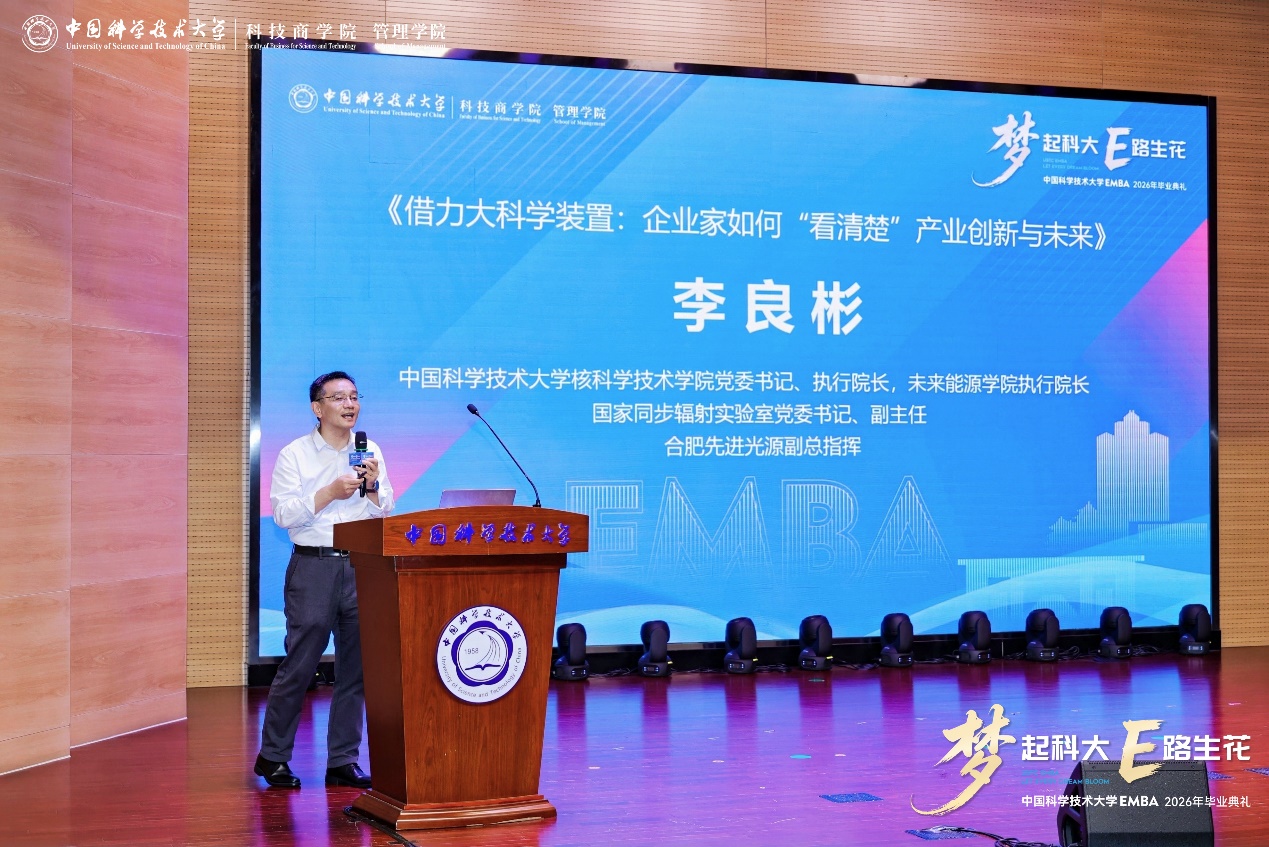
At present, a new round of scientific and technological revolution and industrial transformation is accelerating, and competition in scientific and technological innovation is shifting from isolated breakthroughs to system-level capabilities. Professor Li Liangbin pointed out that large-scale scientific facilities are not only powerful instruments for exploring the unknown world, but also important platforms for achieving breakthroughs in critical core technologies, supporting industrial upgrading, and fostering future industries. Starting with the Hefei Advanced Light Facility, a major national scientific infrastructure project, and drawing on practical experience in overcoming bottlenecks in the industrialization of high-end optical films, he used the four phrases “see clearly, think it through, make it happen, and bring it successfully to market” to systematically explain the complete pathway for the deep integration of industry, academia, and research, extending from the innovation chain and industrial chain to the value chain.
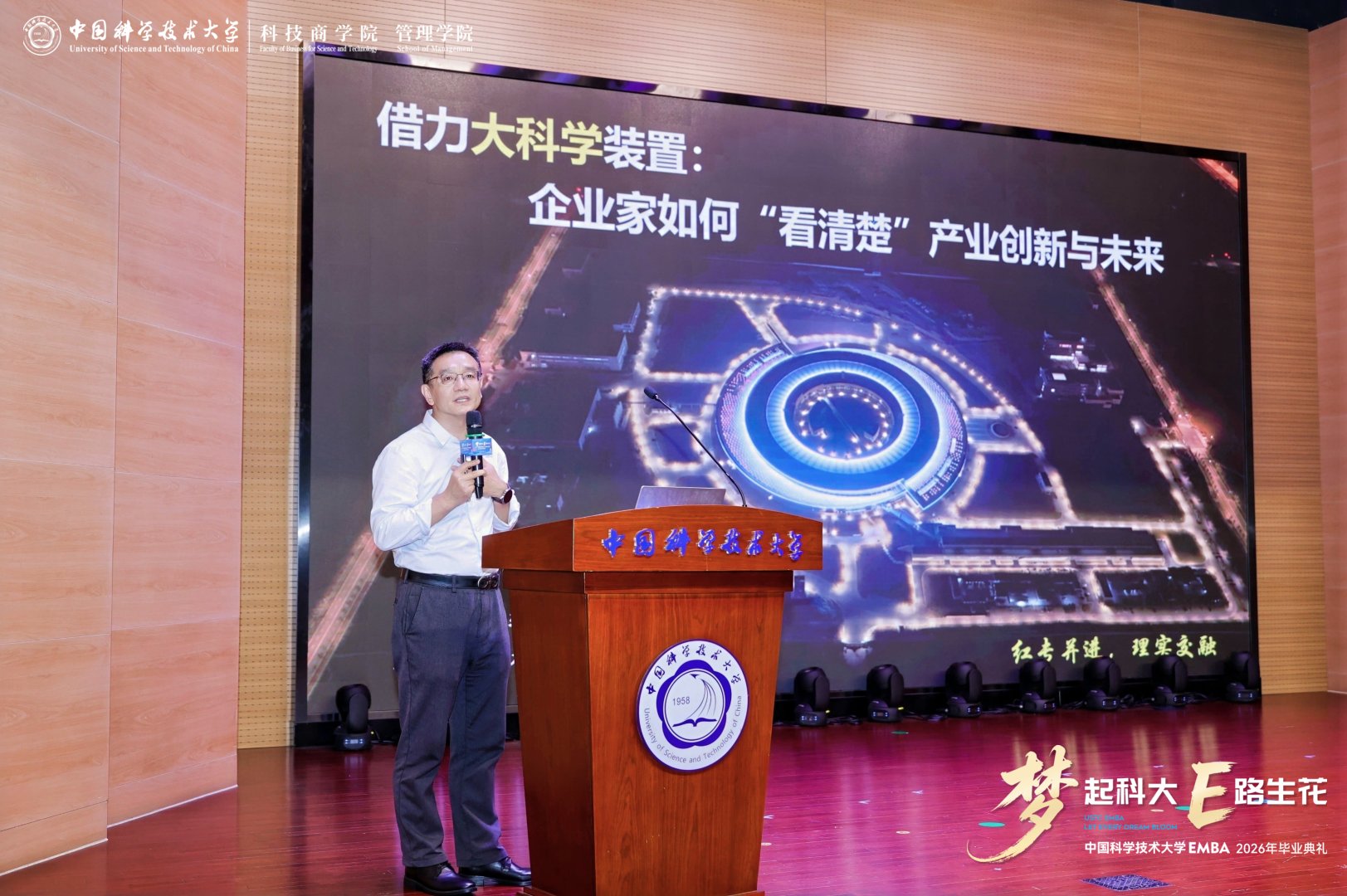
“Seeing clearly” is the starting point. Professor Li Liangbin explained that synchrotron radiation light sources are like “eyes” into the microscopic world. They can help enterprises observe the evolution of the microscopic structures of materials during processing, transforming previously “invisible” processes into “visible” patterns. Taking high-end optical films as an example, synchrotron radiation characterization enables research teams to capture material changes in real time within a multidimensional variable space involving multiple components, multiple fields, multiple scales, and rapid processing, thereby providing a “navigation map” for process optimization.
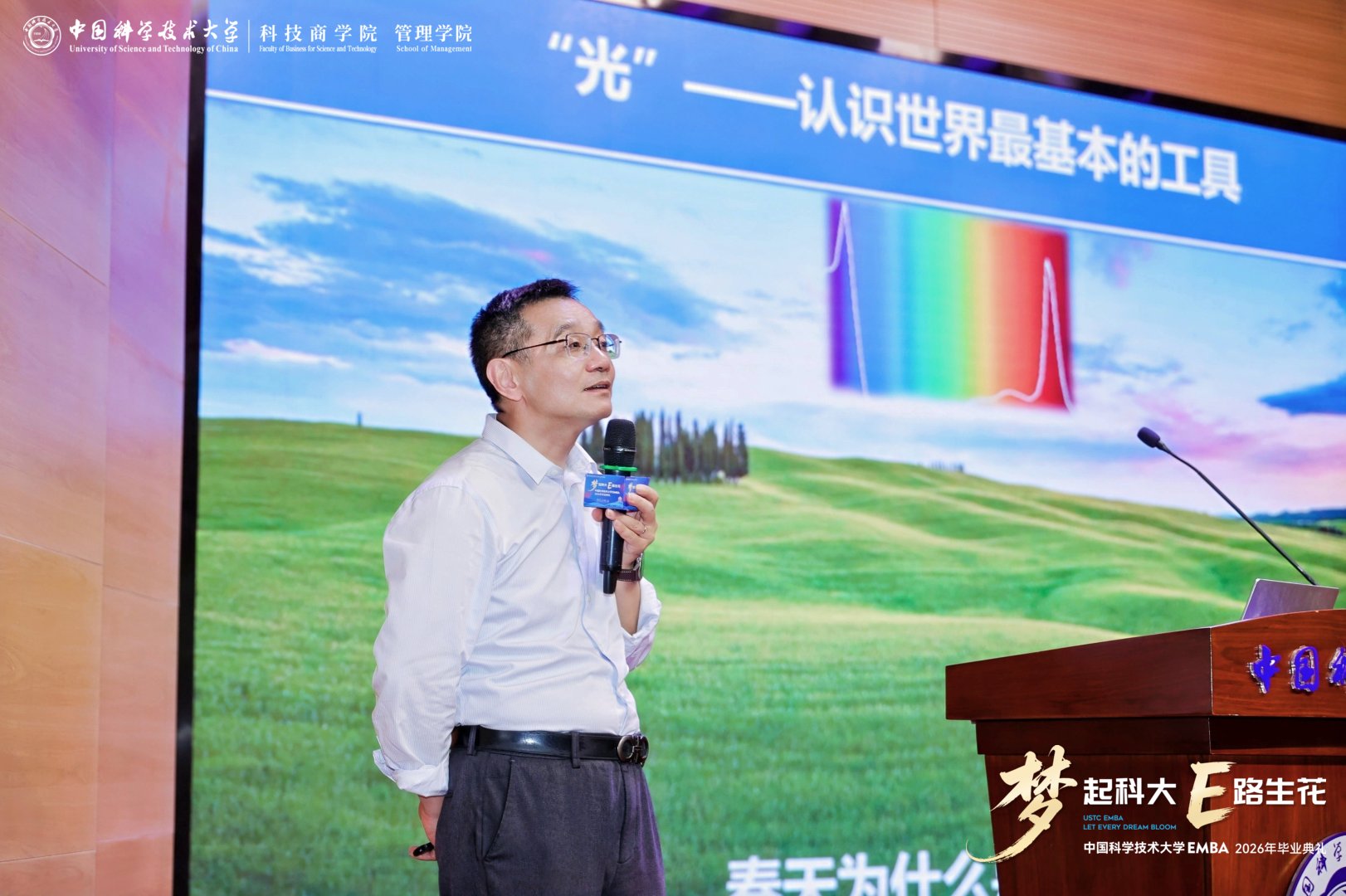
“Thinking it through” is the key. He emphasized that, to truly understand the direction of future industries, entrepreneurs must look beyond market size and short-term popularity and identify the critical links and genuine bottlenecks within the industrial chain. Real industrial challenges should be transformed into technical tasks that can be tackled and validated, while sustained investment and strategic patience are required to bring scientific and technological innovation into the industrial chain.
“Making it happen” and “bringing it successfully to market” are the ultimate objectives. Professor Li Liangbin pointed out that scientific and technological innovation cannot end with academic papers and patents; it must be tested through engineering prototyping, pilot-scale validation, and large-scale production. He shared the team’s experience in establishing joint laboratories with Wanwei Group, Lucky Group, Guofeng, and other enterprises. Through a collaborative model combining the Hefei Advanced Light Facility with university–enterprise joint research and development institutions, the team facilitated the integration of independently developed key film materials for polarizers into BOE’s supply chain, achieving domestic substitution and significantly reducing procurement costs.
Finally, Professor Li Liangbin encouraged all graduates to recognize that, in strategic fields such as new materials and new energy, entrepreneurs must be both “red”—integrating enterprise development with national strategic needs—and “expert”—cultivating deep professional expertise and consolidating the foundation for independent innovation by leveraging large-scale scientific facilities. This embodies the practical significance of the University of Science and Technology of China’s motto, “Being both politically committed and professionally accomplished, and integrating theory with practice”: closely connecting professional capabilities, national needs, and industrial practice, enabling scientific and technological innovation to move from the laboratory to the production line, and ultimately contributing to high-quality development.