
From October 20 to 23, 2026, the 5th Small-Angle Scattering Conference of the Chinese Crystallographic Society was held in Mianyang, Sichuan Province. The conference was jointly organized by the Small-Angle Scattering Committee of the Chinese Crystallographic Society and the Institute of Nuclear Physics and Chemistry of the China Academy of Engineering Physics, with the National Key Laboratory of Polymer Science and Technology and the National Key Laboratory of Neutron Science and Technology serving as co-organizers. Mr. Kunpeng Cui from the Anhui Provincial Engineering Research Center for Advanced Functional Polymer Films attended the conference by invitation, accompanied by Huang Junjie, a student in his research group.
Focusing on small-angle scattering techniques and their applications, the conference featured six thematic sessions: theory and methods of small-angle scattering; small-angle X-ray scattering (SAXS) in polymer materials and its applications; SAXS in biomaterials and its applications; SAXS in nanomaterials and its applications; neutron scattering and its applications; and SAXS in metals and inorganic non-metallic materials and its applications. Through plenary presentations, invited talks, oral presentations, and poster sessions, the conference showcased the latest research advances in the field of small-angle scattering in China, bringing together hundreds of experts and scholars from universities and research institutes across the country for academic exchange.
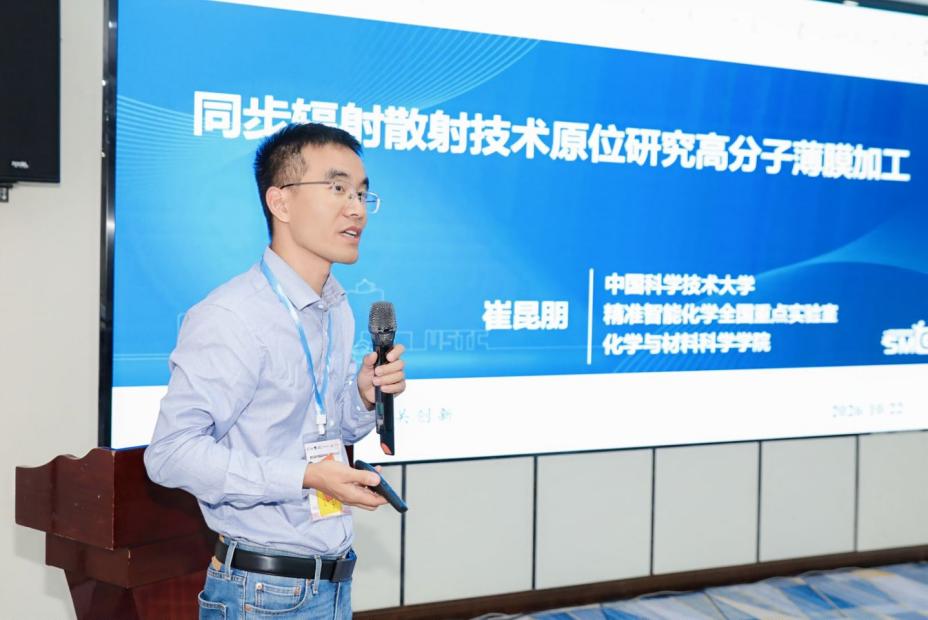
Figure 1. Mr. Kunpeng Cui Delivering His Invited Presentation
On the morning of October 22, Mr. Kunpeng Cui delivered an invited presentation entitled "In Situ Investigation of Polymer Film Processing by Synchrotron X-ray Scattering" in the first parallel session. Focusing on the dynamic evolution of multiscale structures during polymer film processing, the presentation provided a systematic overview of the research group's work on in situ characterization using synchrotron X-ray scattering techniques. The research provides important insights into the relationships among processing, structure, and properties of polymer films, attracting considerable attention and stimulating lively discussions among the conference participants.
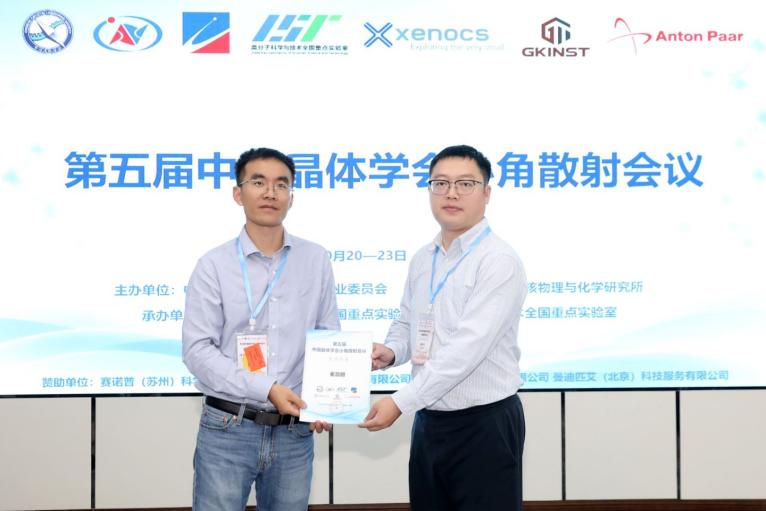
Figure 2. The Session Chair Presenting a Certificate to Mr. Cui
During the conference, Huang Junjie attended the plenary presentations and parallel-session talks, with particular interest in SAXS characterization of polymer materials, neutron scattering techniques, and their applications. He also engaged in in-depth discussions with fellow participants on experimental methods, data analysis, and related topics. On the morning of October 23, he joined other conference participants on a visit to the Institute of Nuclear Physics and Chemistry of the China Academy of Engineering Physics, where they toured the China Mianyang Research Reactor (CMRR). With a power output of 20 MW, the reactor is one of the earliest large-scale neutron science facilities built in China and is distinguished by its stable operation and significant achievements in scientific applications. It is equipped with several scientific instruments, including a small-angle neutron scattering instrument, a neutron diffractometer, and a neutron reflectometer. Through the on-site visit and explanations provided by technical staff, Huang gained a firsthand understanding of the operating principles of reactor-based neutron sources, the structural features of various instruments, and their unique advantages in characterizing the microscopic structures of materials, further deepening his understanding of neutron scattering techniques.
Participation in this conference not only showcased the team's research achievements in in situ scattering characterization of polymer film processing and strengthened academic exchanges with domestic peers, but also broadened the student's academic horizons. It laid a solid foundation for future research on the structure and properties of polymer materials, including PVA polarizing films, using large-scale X-ray and neutron scattering facilities.